Who is your local pharmacist?
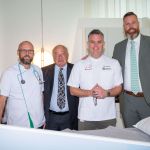
Cindy Excell and George Batchelor are my hometown pharmacists in Te Anau — which is a small lakeside town in Fiordland, on the edge of New Zealand’s South Island wilderness, where I grew up — and both are amazing. I recently assisted with my father’s palliative care back home. It was hard but a special opportunity to make sure his wishes to die at home were upheld. Seeing my old school friend Cindy, one of the local pharmacists caring for Dad, alongside the owner George gave me great confidence he was being looked after by a team that knew him and our family well. One day was very busy and I realised I was too late to pick up Dad’s weekend medications, but fortunately Cindy turned up at our door, medicines in hand and always with a listening ear at the ready.
What is your earliest memory of visiting a community pharmacy?
I can remember being fascinated by the appearance of various medicines as a child — the packaging and the little glimpses you got of the pharmacist at work. Possibly a sign I was going to be a physician.
What feedback do you regularly hear from or about community pharmacy?
I hear two very consistent messages. From the public, I hear how devastating it has been since the National Government reintroduced the NZD 5 prescription co payment. People tell me they are once again forced to choose between picking up their medications or other essentials.
From pharmacists themselves, I’ve consistently heard a readiness to do more deliver health care for their communities. I remember how ready pharmacists were to step into new roles during the pandemic and the many successful changes made to vaccinations, covid medicines and minor ailments. I think we can do more to make the best use of their expertise.
How important do you think community pharmacy is in the wider health system?
Having worked as an infectious diseases physician, I am well aware of the important work of community pharmacy supporting patients with complex conditions and medicines. Pharmacists do a lot to support safe and effective medicine use and adherence. We have our health system backwards right now; we create cost barriers to preventive care in the community so people get incredibly sick and end up in emergency department. Strong community pharmacy is essential to turning this around.
How would you enable community pharmacies to do more to support the health and wellbeing of their communities?
First, we must remove the financial barriers that get in the way of care. Labour has committed to reinstating universal free prescriptions because we know that when cost isn’t a barrier, people have the means to stay healthier.
Second, we need to enable pharmacists to practice at the very top of their clinical scope. During my time as Minister, we rolled out the Minor Ailments Service to support pharmacies in treating common winter 25 illnesses directly. I’m pleased to see the current government has picked up this work, but it can still be expanded. By properly funding pharmacies to provide services like vaccinations, minor ailment consultations, and managing ongoing medications, we free up GPs and emergency departments while giving Kiwis faster, local care.
Third, Labour supports pharmacies staying in pharmacist ownership. The deregulation proposed in the Medical Products Bill is a classic case of the current government prioritising the interests of corporates over community wellbeing and patient safety.
When you look at the proposal to scrap the 51 percent pharmacist ownership rule, what you are actually seeing is a green light for large, multinational corporate chains and supermarkets to squeeze local pharmacies. For decades, the requirement that a pharmacy must be majority‑owned by a registered pharmacist has served a very clear public health purpose: it ensures that the person making decisions about the business is bound by a strict clinical and ethical code of practice.
When a pharmacist owns the pharmacy, the priority is clinical safety and patient care. When an overseas conglomerate or a supermarket board owns it, the absolute priority is shareholder profit and retail margins. We know what happens when healthcare is fully commercialised; independent, owner operated pharmacies that are deeply embedded in their local communities get squeezed out because they cannot absorb corporate‑scale losses.
In relation to your health spokesperson portfolio, what keeps you awake at night?
What keeps me awake is seeing our hard‑won health progress being actively dismantled, and the human cost of those decisions. The current government’s plan to strip billions of dollars from our healthcare system resulting in hiring freezes, underfunding, and severe frontline stress is incredibly alarming.
Knowing that thousands of Kiwis are skipping necessary medications because of a political decision to bring back the NZD 5 prescription fee is deeply troubling. When people can’t afford their inhalers or heart medications, they get sicker. Watching a system slide back into crisis while knowing exactly how to prevent it is what keeps me up.
As health spokesperson, it’s important you model good health and wellbeing.
Do you have a daily routine to stay in tip-top condition physically and mentally?
I love running as it gets me outdoors and in nature. Last year my colleague Camilla Belich and I completed the Queenstown half marathon. In terms of mental wellbeing, I try and be strict with myself about going to bed on time.
How do you plan to recharge your batteries before the election campaign?
I tried to have a very quiet time last summer, knowing that the year ahead would be busy. I’m standing in an electorate, Wellington North, for the first time, so that means knocking on doors every weekend day from here till the election. It is busy but refreshing to be in the community talking about the real things that matter to people.
If you weren’t an MP, what would you be doing?
I’d still be an infectious diseases specialist at Wellington Hospital. It’s a wonderful job and a privilege to get a chance to help people during difficult times in their lives. I enjoyed teaching medical students and put a lot of effort into making sure they could prescribe antibiotics safely. While I miss elements of medicine, particularly the joy of seeing someone recover from severe illness, I also find politics satisfying in its own way. I care deeply about improving healthcare in New Zealand.
What’s the last TV series or movie you watched? Do you like medical dramas?
I just watched The Odyssey movie and loved it! I don’t watch medical dramas — perhaps they don’t offer enough escape from my day job. I like cop shows and thrillers.
How do you want history to judge your time as an MP?
I hope to be judged on whether we moved the needle toward a health system that prevents illness and the resulting cost and disability illness can cause. Whether through our ambitious, world-first public health initiatives like our original smokefree legislation, or by making daily healthcare fundamentally fairer by removing financial barriers like prescription co‑payments. Ultimately, a successful legacy means leaving behind a healthier, more equitable Aotearoa than the one I found.