I saw a pattern emerge early in my career as a junior pharmacist working in Australia's regional communities like Coffs Harbour and Forster in NSW.
Young women would present repeatedly for emergency contraception. Often week after week.
Many didn’t feel comfortable seeing their local GP to discuss longer-term contraceptive options.
There were concerns about privacy, familiarity and stigma — barriers to care — especially in smaller communities.
Years later, in Sydney, the setting has changed but the pattern remains.
Conversations matter
My pharmacy is located between two university campuses, and every week I see young women seeking emergency contraception.
They come in stressed, often overwhelmed and sometimes embarrassed.
Many are juggling study, work, finances and relationships.
As women move through different stages of life — study, early careers, starting families — their needs and priorities shift.
Almost every time, the conversation doesn’t stop at emergency care.
It often becomes an opportunity to talk more broadly about what options might work better for them moving forward.
Conversations about contraception can open the door to broader conversations about relationships, sexual health, mental wellbeing and life circumstances.
Many of the young people I now see don’t have a regular GP.
Instead, care is pieced together through one off interactions; emergency departments and telehealth. Care that can become reactive rather than planned.
This isn’t just an issue for students.
It reflects a broader access challenge for young people, and for many working women as well.
Shifting priorities
As women move through different stages of life — study, early careers, starting families — their needs and priorities shift.
Accessing healthcare needs to adapt alongside that.
Taking time off work, arranging childcare, or waiting days for an appointment isn’t always practical.
In NSW, prescribing contraception requires pharmacists to undertake significant additional university training — up to 18 months beyond our core degree.
Even when the intention is there, preventative healthcare can easily fall down the priority list.
That’s why I’ve been a vocal advocate for specially trained pharmacists to provide prescriptions for hormonal contraception.
This change will benefit my patients.
It expands choice.
Women can now choose whether to visit a GP or their pharmacy.
Where women are
An insistence that there is only one ‘right’ way to access this care is increasingly out of step with modern reality.
Healthcare today happens in many settings. We need to reflect how people actually live their lives.
Community pharmacy is the most accessible primary care provider. We’re open extended hours, no appointment is required and we’re embedded in local communities.
To many pharmacies are familiar and trusted. It’s a place patients can begin conversations they may not have felt comfortable starting anywhere else.
Privacy, safety and standards
Consultations by prescribing pharmacists take place in private consultation rooms, using structured clinical protocols and thorough patient assessments.
Pharmacist prescribing of contraception is not new or untested.
It has been safely implemented in multiple countries, including the UK, and Queensland.
Pharmacists want to take on this role.
In NSW, prescribing contraception requires pharmacists to undertake significant additional university training — up to 18 months beyond our core degree.
Pharmacists make a deliberate choice to undertake this education to expand the care they can provide.
I’m currently doing this training at James Cook University because I want to be able to do more for my patients.
Working together
At its core, this is not about replacing one form of care with another.
It’s about creating more pathways into healthcare.
We’ve seen this approach work before.
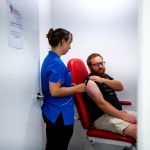
When pharmacists began administering vaccinations, it made access easier.
The percentage of people choosing to get vaccinated at community pharmacy continues to increase.
The same principle applies here.
Where more complex care is needed, or where longer-term options such as implants or intrauterine devices are more appropriate, referral to a GP remains essential.
In many cases, pharmacy can act as a bridge into those services — helping patients take the first step.
This is how care should work — each profession able to deliver care aligned with their skills, experience and qualifications.
Expanding pathways
At its heart, this reform recognises a simple truth: one size does not fit all.
Some women will always prefer to see their GP.
Others will choose their local pharmacy. Many will use both at different times in their lives.
That flexibility matters. Choice matters.
Women deserve the ability to access safe, effective care in a way that fits their lives.
The sad reality is that for too many the barrier isn’t where care is delivered, but whether they can access care at all.