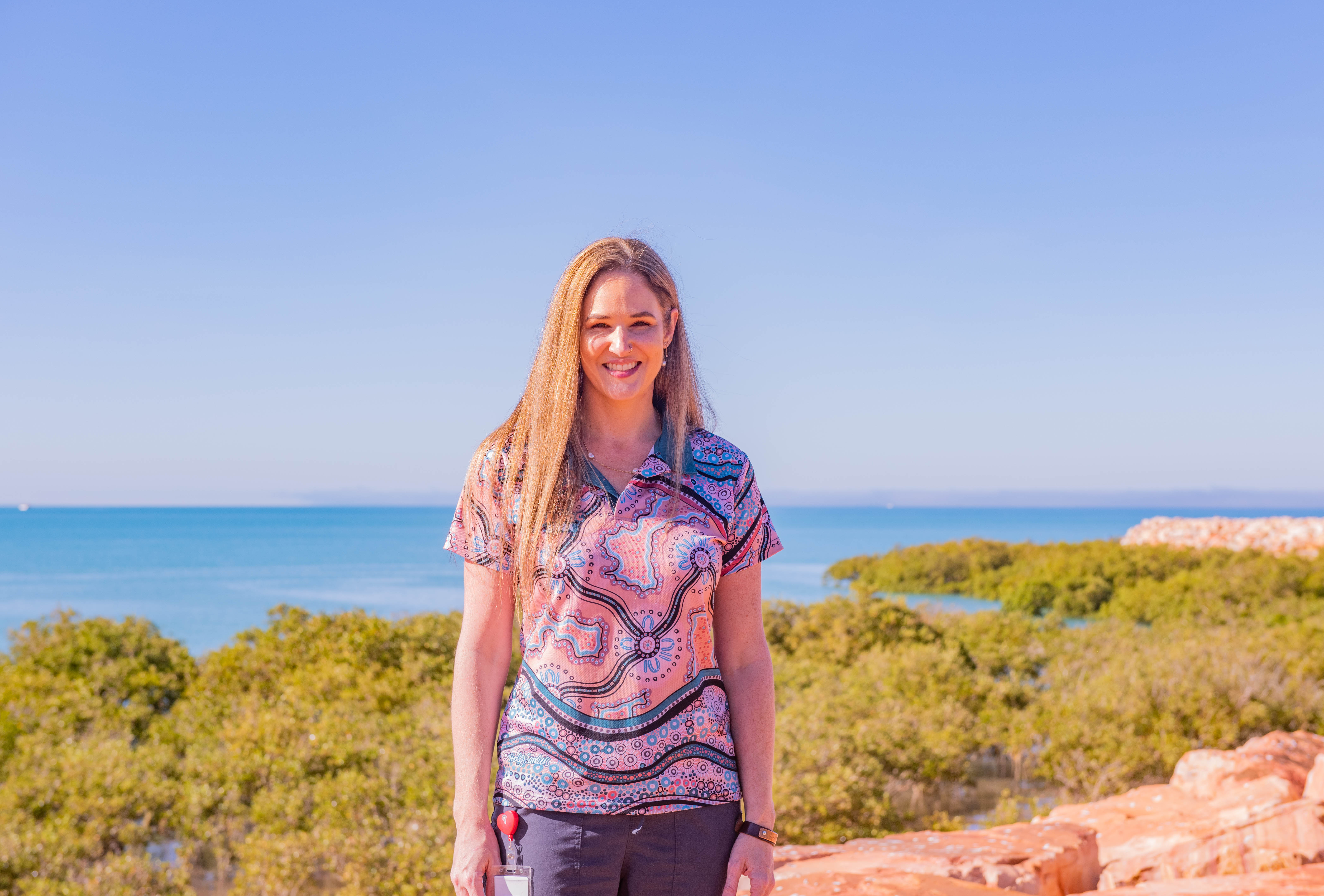
Hannah Mann once imagined a future in hospital pharmacy; instead, a remote placement showed her the profound gap in access to care for First Nations communities — and the role she could play in closing it.
“Everyone should have access to a pharmacist,” she says.
“It doesn’t matter if you’re living in a remote area, you should get the same level of care as if you were walking into a pharmacy store.
“When I started up here, a lot of [First Nations peoples] had never had a pharmacist visit, so our first steps were explaining what a pharmacist is and what a pharmacist does.”
A few years after moving to Broome, in the Kimberley region, where she did her placement, Hannah opened Kimberley Pharmacy Services in 2009.
She has since expanded her ownership to include community pharmacies in Derby, about a two-hour drive north, and Fitzroy Crossing, roughly four hours east.
We always look at making sure that patients have six weeks of Dose Administration Aids available during the wet rather than three or four, and we really look at making sure that if the roads were cut for four weeks at a time, and we couldn’t get in and out of places, that no one would go without medicine.
Hannah Mann
Across the three sites, she employs 50 people who help her service around 10,000 patients.
No retail space
The Broome pharmacy operates without a traditional retail shopfront, instead focusing on the delivery of remote health services.
As a result, many of her patients have never stepped foot inside the pharmacy.
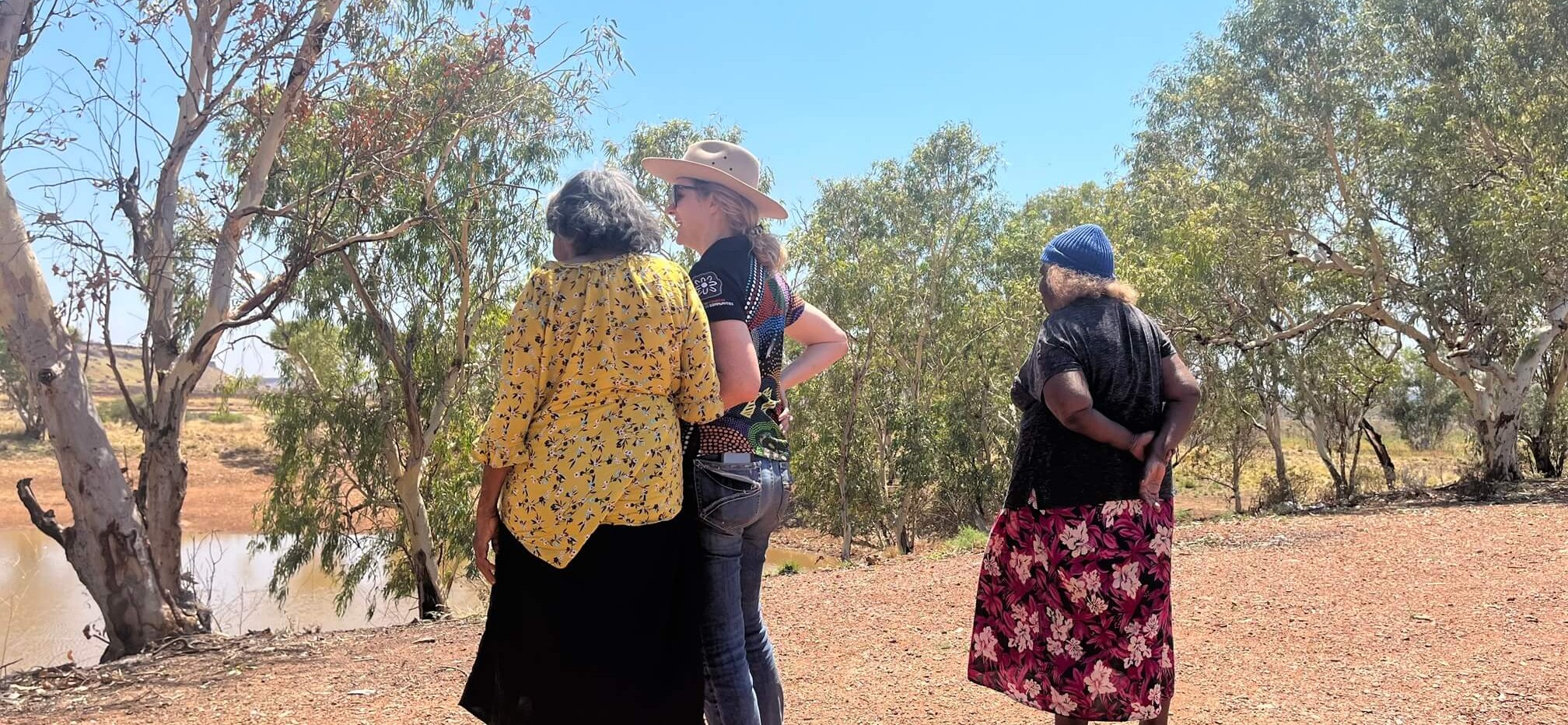
“There’s a small waiting area like what you see in like a small GP practice and then there’s a couple of consult rooms and four dispensing stations.
“There’s no retail space at all,” she says.
Vaccinations, home medicine reviews, hospital discharge clinical reviews and remote clinic support are just some of the services she provides.
When I started up here, a lot of [First Nations peoples] had never had a pharmacist visit, so our first steps were explaining what a pharmacist is and what a pharmacist does.
Hannah Mann
She is also involved in education on medication policy, medication safety and clinical governance, and is studying to become a prescribing pharmacist.
Her team coordinates with nurses, Aboriginal health practitioners and Aboriginal medication support officers to ensure continuous supply of medicines and other clinical services to remote health clinics via couriers, trucks and charter flights.
Beating the weather
Hannah is proud of her robust supply model which is built to withstand logistical complexities caused by vast landscapes and extreme weather conditions.
Due to intense heat and humidity between November and April, the region experiences monsoonal weather, which often causes major flooding.
In 2021, the wet season brought with it a year’s worth of rain within a short period. Many towns were cut off, limiting access to food and medication. But Hannah’s team was well prepared and delivered medicines by flying from town to town with the army.
“We always look at making sure that patients have six weeks of Dose Administration Aids available during the wet rather than three or four, and we really look at making sure that if the roads were cut for four weeks at a time, and we couldn’t get in and out of places, that no one would go without medicine,” she says.
“It means that we carry a significantly higher volume of stock than most people would expect and stockpile up to three months of medication.”
Medication labelling
Despite a demanding schedule delivering remote pharmacy services, Hannah somehow finds time to work on purpose-built technology and research projects.
Hannah is leading a community co-designed medication labelling project to make medicine instructions clearer and more culturally appropriate for patients across the Kimberley
By rethinking standard language and symbols used on packaging, such as replacing confusing terms like “breakfast” or unclear icons like the moon, Hannah hopes to develop personalised labels which reflect how patients understand time and medicine use.
“During our surveys, patients told us using a moon to reflect nighttime makes no sense because the moon rises at all different times.
“If they’re meant to take their medication at bedtime, it should be a picture of a bed.”
Hannah points out, however, the project is more than icons.
It’s about involving patients in decisions, supporting choice and self-determination, which improves adherence.
While working with the University of Western Australia, she also contributed to the development of MMEX, a web-based electronic health record aimed at streamlining medication management across regional health services.
The system integrates prescribing, dispensing and supply into one platform, helping coordinate care when multiple healthcare providers are involved across different locations.
Improving care for First Nations patients is at the heart of every project she undertakes.
“Just because you don’t have a pharmacy in your remote community, or a full-time pharmacist on the ground, you should be able to access the same level of care at the same standard as anybody else.”