The function centre at the Sofitel Broadbeach on Australia’s Gold Coast in Queensland was at capacity, with attendees standing shoulder-to-shoulder, refreshments in hand, and a bright balloon arch marking the entrance to the room.
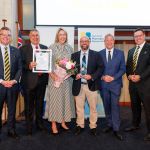
A photographer moved methodically through the APP2026 crowd, capturing each award recipient, their supporters and industry representatives.
The atmosphere carried the upbeat, end-of-day energy which settles in after most big conference programs — warm, engaged and celebratory.
A colleague from Victoria waved me over. “You need to meet the two Alexes,” she said.
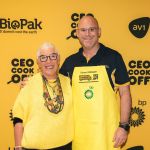
Moments later, I was being introduced to a pair of pharmacists still fresh from their Rural Pharmacy Video Award win.
Their nicknames? Alex One and Alex Two.
We fell into conversation so naturally — nearly two hours passed before I realised how long we’d been talking.
Alex One, or A1, is a pharmacist and proprietor; his real name is Alexander Look.
Alex Two, A2, is a pharmacist with an extraordinary back story; her real name is Alexandra Lynn.
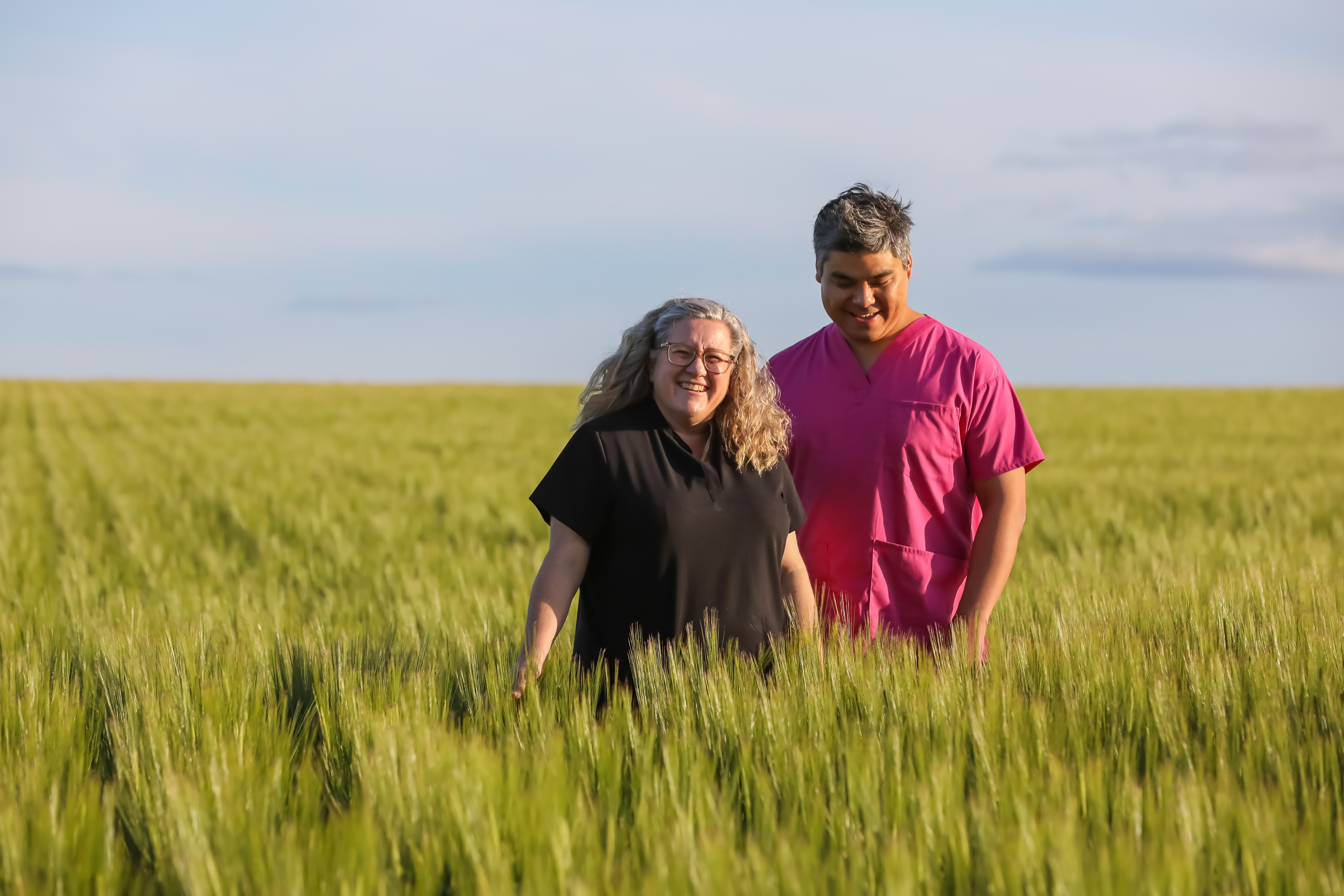
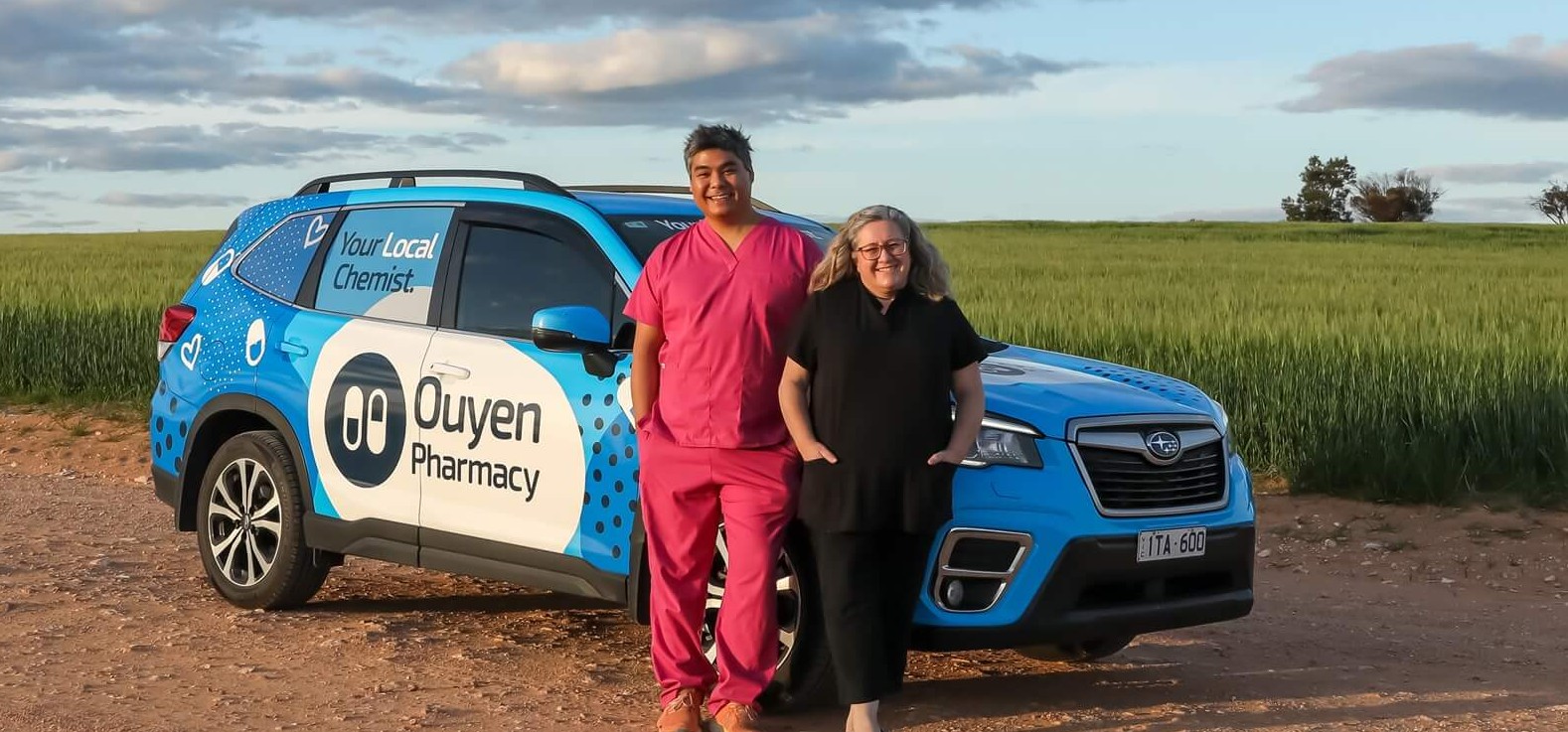
Their rapport is immediate and unforced, the kind which develops only through shared work, shared responsibility and the particular demands of rural healthcare.
We try to bring health to the community.
Alex One
They met through friends at a past APP conference — and unsurprisingly clicked immediately. Behind their easy interaction lies a more complex story: an Australian town of around 1,100 people without a regular GP.
Together with their team, they are now a community pharmacy which has become one of the most stable points in local, rural healthcare.
Life in Ouyen
Ouyen sits in the heart of Victoria’s Mallee, a grain-andlivestock region where distances are long, services are dispersed and continuity of care is often difficult to maintain. The pharmacy at 47 Oke Street has become a constant in a landscape where few constants remain.
For Alexander, or Alex One, the move to Ouyen was not part of an early career plan.
“I grew up in Brisbane,” he tells me during our more formal interview weeks after our first meeting.
“I studied in Brisbane. I did all my placements in rural areas, and moving to Ouyen was the best decision I’ve ever made.”
Did you know?
The Foundation of Mallee Track is a community driven, registered charity supporting local health and wellbeing across Ouyen and surrounding farming communities.
Working with Mallee Track Health and Community Service, it funds essential initiatives — from the local clinic and aged care facility to placing lifesaving community defibrillators — keeping care close to home.
Alex One first arrived as a locum, driving the 100 kilometres from Victoria’s much larger town of Mildura to support an owner who was preparing to sell.
“She seemed really tired and I just wanted to help her out,” he says.
“But immediately I could tell the type of community it was — people were grateful, they looked out for each other, they had initiative.”
When the sale fell through with another buyer, Alexander stepped in.
Accommodation was limited, so he lived in a tiny house on wheels for three years.
“It was a bit of problem-solving,” he says. “But it was worth it.”
Today, Ouyen is home.
Finding purpose
Alexandra’s — or Alex Two’s — path to pharmacy is markedly different.
Following years in Sydney as a younger person, she spent a significant period in the United States working in and around police investigations.
“I started out as a 911 operator and then transferred into investigations,” she says.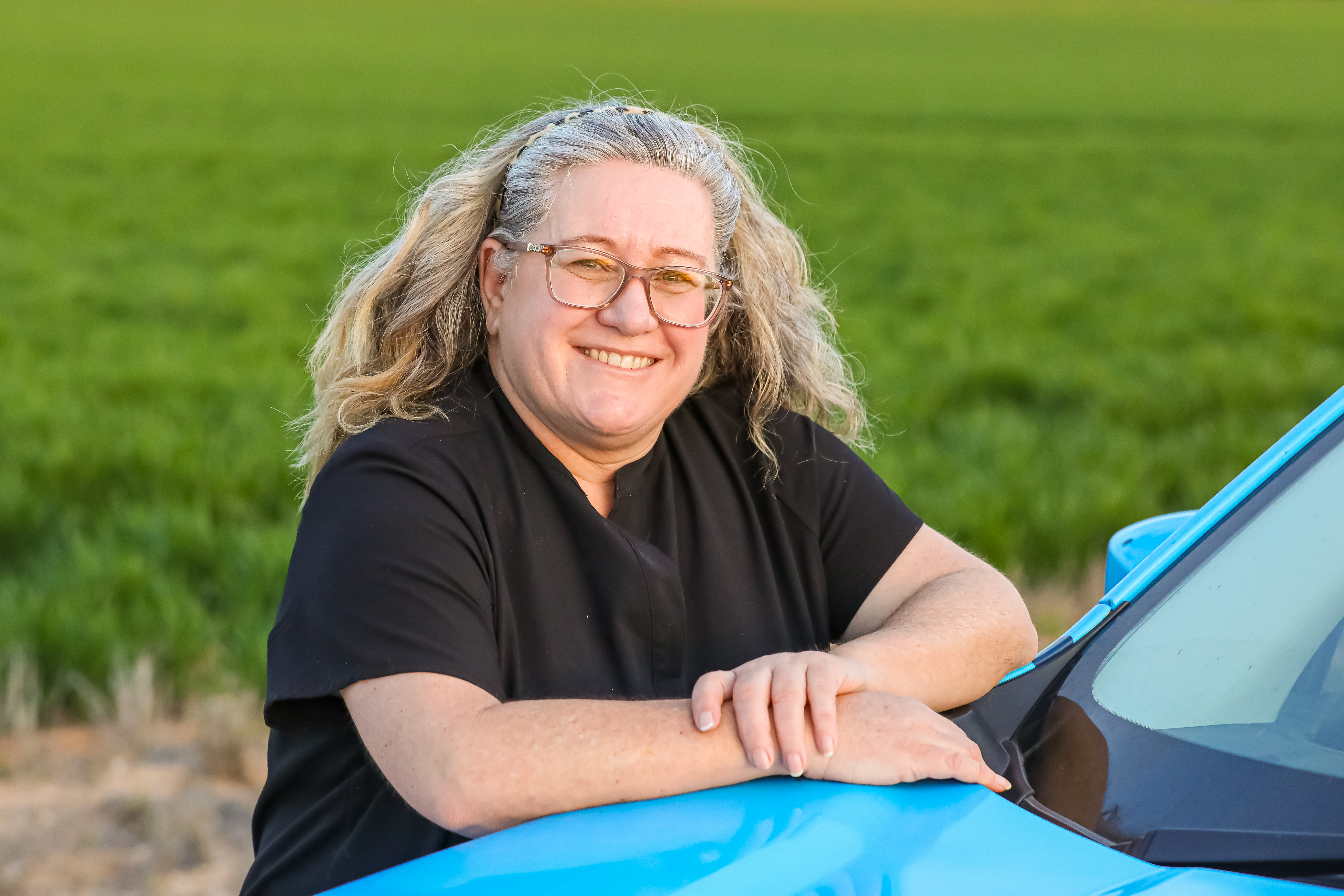
“When I left, I was supervising the civilian staff.”
That career unfolded alongside a long period of personal challenges.
At one point Alexandra had been living with a migraine “24 hours a day for over five years.”
The experience shaped her interest in medicines and their mechanisms and reinforced the value of clinical care in a very practical way.
Her family background strengthened this pull toward health.
We were the first to initiate pharmacist-led medicines reviews, vaccinations, prescribing, delivery services, travelling services.
Alex One
“My mother was a nurse. Her mother was a nurse. My cousin is a nurse. One of my sisters is a nurse, another is a social worker,” she says.
“It’s definitely in the blood.”
But, Alex Two says studying pharmacy wasn’t easy while raising four children.
I started out as a 911 operator and then transferred into investigations.
Alex Two
“When the kids were with their dad, I’d study. When they were home, they were my priority,” she says.
“A friend told me, ‘Your kids won’t always be there, but school will.’ It still gives me chills.”
Years later, at 47, she made the decision. “I either go now or I don’t go at all,” she says. “So, I sold the house, came home to Australia, and started again.”
She met Alex One at APP in 2025, and within a week she was driving to Ouyen for a locum placement.
She stayed.
Transforming care
When Alex One purchased the Ouyen pharmacy, it operated as a traditional retail-focused business with limited clinical services.
“There weren’t any services occurring,” he says.
“We were the first to initiate pharmacist-led medicines reviews, vaccinations, prescribing, delivery services, travelling services.”
Today, the pharmacy functions as a local health hub.
Three consult rooms support a rotation of visiting clinicians, including optometry, audiology and skin cancer checks.
The team has established sleep apnoea services, Q-fever vaccination and a delivery network which reaches farms and outlying properties.
“We try to bring health to the community,” he says.
“We bring others in so people don’t have to travel 100 kilometres each way to Mildura.” The shift has been significant — and is widely recognised.
The wider team
Both Alexes emphasise the pharmacy’s progress is only possible because of the team around them.
They have built a workplace which prioritises stability, professional growth and genuine care for staff.
I wanted people to see I wasn’t just a business owner coming in to take profits. I wanted to be part of the fabric.
Alex One
Team members receive a gym membership as part of their employment, and the culture is deliberately structured to feel supportive and connected.
The visual representation of this — the team working together, supporting each other and the community — forms a central part of their award-winning rural video entry.
“We treat it like a family,” Alexander says.
“People need to feel valued and looked after if they’re going to look after others.”
The result is a workplace which attracts and retains staff in a region where recruitment is often difficult, and a team which reflects the same commitment to a community which defines the pharmacy itself.
Filling the gaps
The Ouyen community at large has not had a GP they can call their own for many, many years.
“We’ve been without a regular GP for at least 10 years,” Alex One says.
“At the moment it appears to be every five days there’s a new doctor.”
The implications are substantial. Continuity of care is disrupted, and chronic disease management becomes fragmented.
Patients repeat their histories to a rotating roster of unfamiliar clinicians. Locums provide essential support, but they are temporary by design.
The pharmacy, by contrast, remains a constant.
Alex One made a deliberate decision early on to live locally, shop locally and participate fully in the community.
“I wanted people to see I wasn’t just a business owner coming in to take profits,” he says. “I wanted to be part of the fabric.”
His choice has shaped the trust the pharmacy now holds.
Emotional work
The clinical workload is considerable. The emotional workload is equally so.
“We deal with the whole spectrum of a person’s life,” Alex One says. .
“From really happy events — having children, getting great news — to the very opposite. Sometimes it’s quite dark.”
Domestic violence. Mental health crises. Grief. Isolation.
“Unfortunately, we are increasingly seeing patients come to us for assistance with domestic violence and mental health issues,” he says.
“Because we’re the constant people know and trust.”
Alex Two experiences the same dynamic.
“You take them with you outside the pharmacy,” she says.
“I can’t go to the grocery store without being stopped two or three times. But that’s not annoying — that’s connection.”
Both describe the work as a privilege. And a responsibility.
Community strength
Both Alexes say Ouyen is a community which builds itself what it needs. It is the third character in their story.
“The community wanted a lake, so they built it,” Alex Two says.
“They purchased a building and volunteers renovated it into a 24-hour gym. Another group, the Foundation of Mallee Track, bought an X-ray machine for the clinic and paid to train staff to use it.”
During recent floods, Alexandra’s neighbour — also her landlord — checked the road each morning.
“He’d say, ‘You’re not getting out today,’ and then he’d drive me to work,” she says.
“That’s the kind of place this is.”
The pharmacy reflects the same ethos: practical, responsive and community-driven.
After hours
After closing the pharmacy and studying until 9pm some nights for their various scope qualifications, the two Alexes often walk next door to The Taste Lab & Dispensary Bar — the pharmacy-themed alfresco venue Alex One established as a place for the community to gather.
It is Ouyen’s only outdoor cocktail space, open mostly on Fridays and Saturdays, serving themed drinks, slushies and street-kitchen food.
It has become a bit of a social anchor for a town which values connection as much as service.
It’s a beautiful community. The staff know everyone — who’s had a baby, whose husband is unwell. They look out for each other.
Alex Two
Farmers, teachers, nurses, truck drivers and the pharmacy team all pass through.
It reinforces a simple truth: rural healthcare is not solely clinical. It is relational. It’s communal. And it is sustained by trust and hard work.
Looking ahead
The Alexes’ pharmacy continues to expand its clinical scope.
Prescribing is increasing. Visiting services are growing. Infrastructure is strengthening.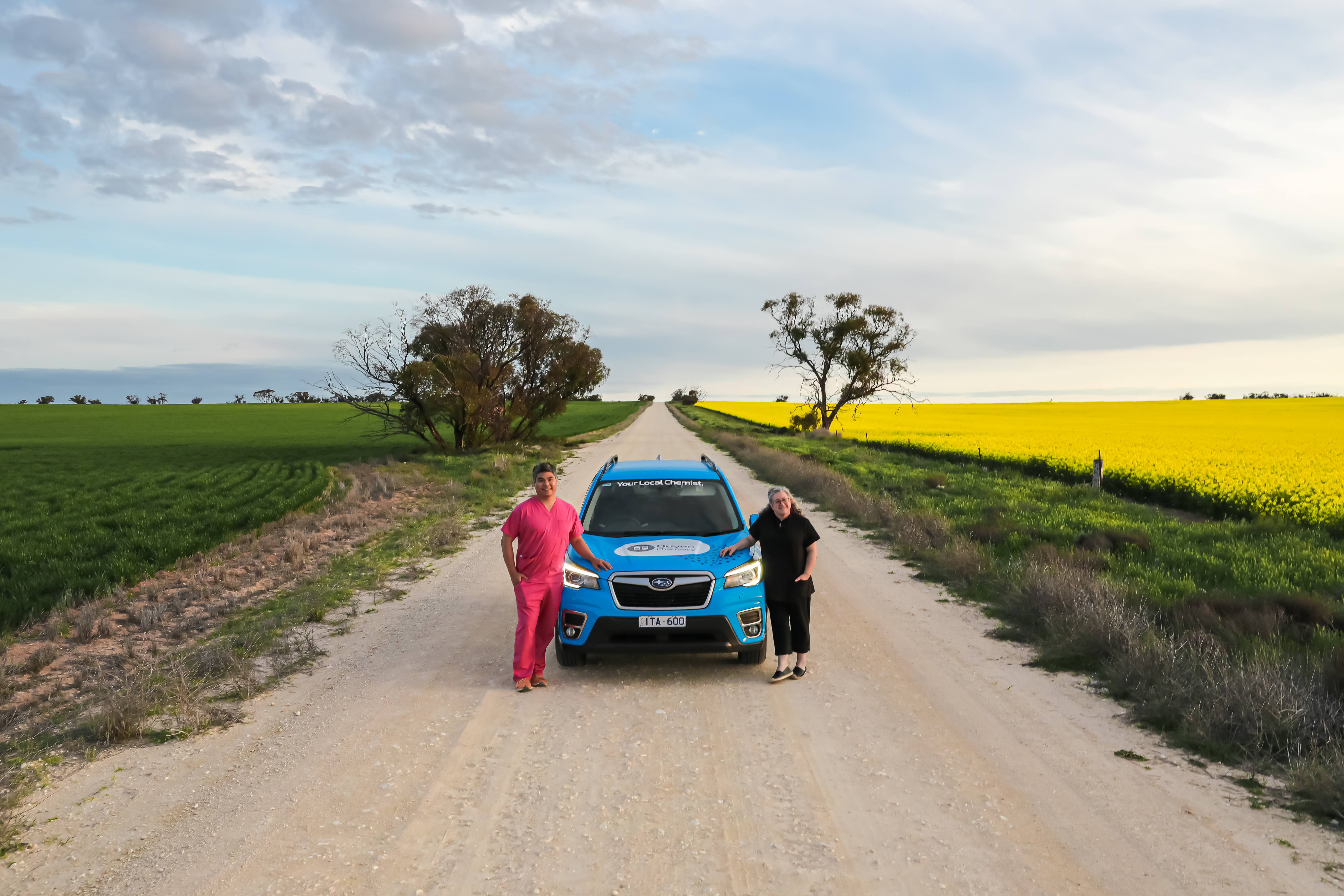
The community continues to advocate for improved access, and the pharmacy continues to respond.
For Alex One, the work has become a vocation.
“I wasn’t entirely set on pharmacy early on,” he says.
“But since moving to rural areas, I couldn’t see myself doing anything else.”
For Alex Two, it represents a new chapter. “I lucked out coming down here,” she says.
“It’s a beautiful community. The staff know everyone — who’s had a baby, whose husband is unwell. They look out for each other.”
Together, they have built a service which is more than a business. It is a point of continuity. A source of stability.
A place where two pharmacists, from two very different backgrounds, found purpose. And a place where a town found its steady point