Patients first: more access, not less
Patients are the losers in the medical lobby’s latest inaccurate scare campaign against expanded pharmacist prescribing and greater access to primary healthcare through community pharmacy.
With one in four Australians already delaying or missing GP care when they need it, the scaremongering comes at a time when patients need more safe and accessible options for primary healthcare, not fewer. ABS data show 26.6% of Australians delayed or did not see a GP when they needed one in 2024–25.
The public is ready for the change. The Australian Healthcare Index found 90% support for pharmacists being able to prescribe medicines.
President of the Pharmacy Guild of Australia, NSW Branch, Mario Barone said the latest opposition followed a familiar pattern.
“Ten years ago, many of the same medical lobby groups opposed pharmacists vaccinating. Today we're hearing the same tired arguments.
“The public isn't buying it. Patients can see through the scare campaign because they're the ones who can't get in to see a GP.”
We’ve heard this before
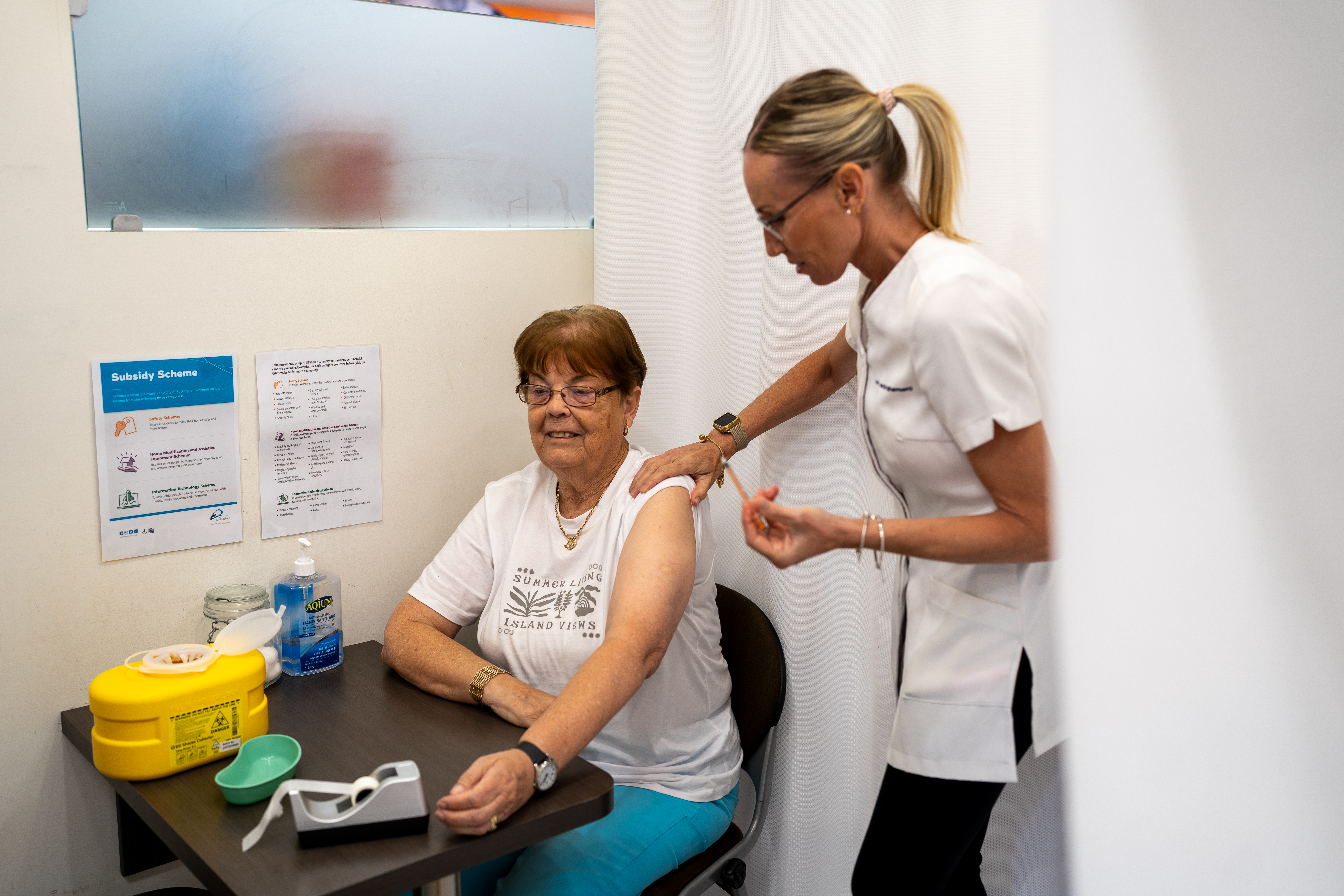
A decade ago, pharmacists faced fierce resistance as they moved into vaccination. Today, pharmacist vaccination is an established part of Australia's healthcare system.
Pharmacist prescribing is following a similar path.
Patients in Queensland and the Northern Territory are already benefiting from pharmacists providing care for a broader range of everyday and longer-term conditions.
In NSW, pharmacists are already treating uncomplicated urinary tract infections and providing oral contraceptive resupply. Around 40,000 patients have accessed UTI treatment through NSW community pharmacies, while more than 2,000 women have received oral contraceptive resupply.
Pharmacist prescribing has also been established internationally for years, including in New Zealand, the United Kingdom and Canada.
“Independent studies in Australia and overseas show pharmacist prescribing to be safe and to follow best-practice guidelines,” Mario Barone said.
“This isn't an untested model. Pharmacists are already prescribing in Australia and around the world.”
More scope means more training
Importantly, expanded prescribing does not simply mean asking pharmacists to do more without additional preparation.
Prescribing pharmacists complete additional university education and training, including differential diagnosis, medical history taking and clinical assessment.
In NSW, pharmacists completing appropriate prescribing qualifications through the University of Technology Sydney and University of Newcastle will be able to align their scope with pharmacists holding an equivalent graduate certificate from James Cook University.
That additional training sits alongside pharmacists’ existing expertise in medicines and their role as accessible primary healthcare professionals.
“Patients are seen in a private consultation room, their medical history is taken, and details of the consultation and treatment are shared with their GP, if they have one,” Mario Barone said.
No wrong door to primary healthcare
The case for expanded pharmacist prescribing is ultimately about access.
One in four Australians is already reporting difficulty accessing a GP when they need one. Closing off another avenue of care does nothing to address that problem.
“Telling those patients to wait longer for healthcare does not improve patient safety. It leaves people without care,” Mario Barone said.
“Pharmacist prescribing doesn't replace GPs. It gives patients another safe, timely option and frees GPs up for the complex and chronic cases where their expertise matters most.”
That distinction is important.
Expanded scope is not about pharmacists replacing doctors. It is about making better use of the entire primary healthcare workforce so patients can receive the right level of care from the right health professional, at the right time.
The Australian Institute of Health and Welfare recognises pharmacists alongside GPs, allied health professionals and other practitioners as part of Australia's primary healthcare workforce.
And despite the GP lobby’s disappointing mistruths, Mario Barone said collaboration between pharmacists and doctors is already occurring every day in communities.
“In the real world, doctors are working closely with pharmacists who offer these services, and that collaboration is delivering better care for patients.
“That's the reality, and it's what we're focused on.”
“For community pharmacy, the principle is straightforward: patients don't benefit from having fewer options for care. They benefit when appropriately trained health professionals work together and patients can access safe, timely healthcare closer to home.”
Let's remember:
- Prescribing pharmacists operate in Queensland and the NT.
- Independent studies show pharmacist prescribing to be safe and to follow best-practice guidelines.
- Pharmacist prescribing has been operating overseas in countries like New Zealand, the UK and Canada for decades.
Sources: ABS Patient Experiences 2024–25; Australian Healthcare Index.