Over the past decade, community pharmacy has been steadily changing.
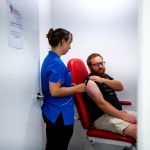
Pharmacists have taken on a widening range of services beyond the supply of medicines: education on how to use them safely, immunisation, and the timely provision of treatment for conditions such as urinary tract infections and the prevention of unwanted pregnancy.
Pharmacist prescribing is the next step in that longer-term structural shift.
In a growing number of places, community pharmacists can now assess, diagnose and treat a defined set of everyday conditions and, where it is clinically appropriate, prescribe for them.
These practitioners are known as pharmacist prescribers, and they are the product of a deliberate and demanding program of additional training.
This is not the profession reinventing itself for its own sake.
PGA data show the average person visits a community pharmacy around 18 times a year3, far more often than they see any other health professional, and for many, particularly outside the major cities, the pharmacist is the most accessible clinician available to them.
It is a considered response to an uncomfortable reality: demand for healthcare is outstripping our capacity to supply it, and the strain is felt most acutely in general practice.
Behind the numbers
The Royal Australian College of General Practitioners projects a shortfall of more than 17,000 full-time GPs by 2040 without intervention1.
Affordable access is narrowing at the same time, with the proportion of GP visits bulk billed falling from nearly 85 percent in 2019 to 2020, to around 78 percent in 2024 to 20252.
In regional, rural and remote communities, where these pressures compound, securing an appointment can mean waiting days or travelling hours.
Pharmacies are already where many Australians turn.
PGA data show the average person visits a community pharmacy around 18 times a year3, far more often than they see any other health professional, and for many, particularly outside the major cities, the pharmacist is the most accessible clinician available to them.
Extending what these trusted and highly accessible practitioners can safely offer is among the most practical responses available to a system under this much pressure.
Thorough assessements
Becoming a pharmacist prescriber is not a short course.
It requires a return to university, on top of the five years already needed to register as a pharmacist, to complete rigorous postgraduate study that is externally accredited and examined by experienced clinicians and academics.
Pharmacists learn to assess a patient thoroughly, to reason towards the most likely diagnosis, and to weigh the evidence for treatment, both drug and non-drug.
They are assessed against the scope of practice they will enter, so that graduates are genuinely prepared for the responsibility they take on.
And they learn, above all, to recognise the limits of that scope, and when a problem belongs with another practitioner.
That final judgement is the one most often underestimated.
Of the AUD 270 billion Australia spent on health in 2023 to 2024, hospitals accounted for 42 percent and primary care for barely a third4, despite good primary care being precisely what keeps people out of hospital.
The pharmacist prescribers I have taught hold a deep respect for general practice and a clear understanding of where their role sits within a wider team.
Their purpose is to add to a patient’s care and to work alongside the practitioners already providing it.
Health professions have always evolved as community need has changed; approached carefully and collaboratively, this is simply the next chapter of that evolution.
Back to front
There is a common assumption that prescribing is the difficult and risky part of a consultation. In my experience the opposite is true.
Writing the prescription is the visible act at the end.
The substantive work comes before it: earning enough trust to take an honest history, establishing what is actually going on, weighing one possibility against another, understanding the whole person and the complexity they bring, and involving them in the decision about what happens next.
Safe prescribing rests as much on recognising when a prescription is not the answer as on knowing when it is, and on reaching either conclusion deliberately and without haste.
A pharmacist who can be seen without an appointment is often the first to notice the blood pressure that is too high or the cough that has lasted too long.
That reasoning is what the training is built around.
None of this alters the fact that we fund the system back to front.
Of the AUD 270 billion Australia spent on health in 2023 to 2024, hospitals accounted for 42 percent and primary care for barely a third4, despite good primary care being precisely what keeps people out of hospital.
A substantial share of hospital admissions are considered potentially preventable through timely care in the community5, and Australian research has found that each dollar invested in primary care can save several times that amount in downstream hospital costs6.
Patient care first
We are, in effect, investing most heavily at the most expensive end of the system, where problems are hardest to reverse.
What strikes me most about the pharmacists entering these programs is what motivates them.
Healthcare works best when every professional is supported to practise at the top of their training, and when those around a patient work with one another rather than past one another.
It is not recognition; it is patient care.
Many work in country towns where they know their patients across years and whole families, and where they see firsthand what a delayed appointment costs.
A pharmacist who can be seen without an appointment is often the first to notice the blood pressure that is too high or the cough that has lasted too long.
Sometimes the most valuable thing they do is not to treat, but to identify a problem early and direct the patient to the right service.
Healthcare works best when every professional is supported to practise at the top of their training, and when those around a patient work with one another rather than past one another.
Pharmacist prescribing is one considered, carefully built way for the profession to answer the call of communities that are currently underserved: to help keep people well, to relieve the pressure on general practice and on our hospitals, and to widen the front door of a health system that badly needs it.
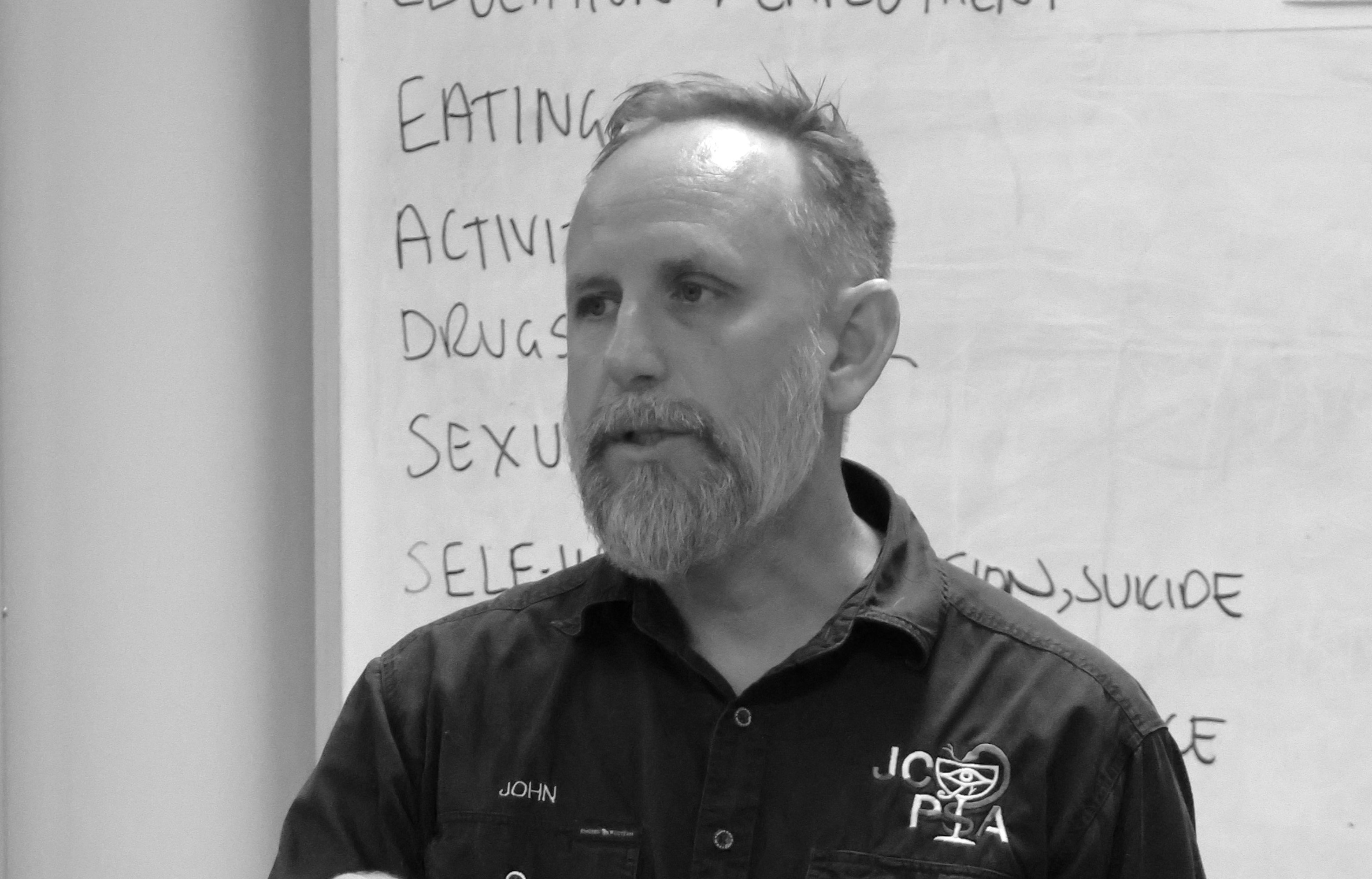
Associate Professor John Smithson is a prescribing pharmacist and pharmacy head of department at James Cook University, who co-designed and now implements pharmacist prescribing education programs for Australian pharmacists.
References
- Royal Australian College of General Practitioners. RACGP National Workforce Strategy 2025–30 (first edition, 2025) — projected shortfall exceeding 17,000 full-time-equivalent GPs by 2040 without intervention. https://www.racgp.org.au/advocacy/racgp-national-workforce-strategy-2025-30
- Department of Health, Disability and Ageing. Medicare statistics: GP non-referred bulk-billing rate, 2024–25 (77.9%, down from 88.9% in 2020–21). https://www.health.gov.au/sites/default/files/2025-11/medicare-statistics-year-to-date-dashboards.pdf
- Pharmacy Guild of Australia. About the Guild — community pharmacy patient visits (an average of 18 visits per person per year). https://www.guild.org.au/about-us
- Australian Institute of Health and Welfare. Health expenditure Australia 2023–24 (total $270.5 billion; hospitals 42.1%, primary health care 33.0%). Canberra: AIHW; 2025. https://www.aihw.gov.au
- Australian Institute of Health and Welfare. Disparities in potentially preventable hospitalisations across Australia. https://www.aihw.gov.au/reports/primary-health-care/disparities-in-potentially-preventable-hospitalisa/summary
- Zhao Y, et al. Better health outcomes at lower costs: the benefits of primary care utilisation for chronic disease management in remote Indigenous communities in Australia’s Northern Territory. BMC Health Services Research. 2014;14:463. https://doi.org/10.1186/1472-6963-14-463