“How can I start compounding?” is probably the question I hear most often when speaking with other pharmacists.
Their interest is understandable. Demand for compounding is expanding across Australia and New Zealand as patients seek tailored therapies and medicine shortages increase.
The compounding market in Australia today exceeds AUD 166 million and is projected to grow beyond AUD 252 million by 2030.
But compounding is more than a commercial consideration. It enables pharmacotherapeutic options for patients and prescribers beyond mass‑manufactured medications.
It fills gaps during medicine shortages. It connects pharmacists with opportunities for professional development which come with responsibilities, since the purpose is improved patient outcomes.
The patient is the reason compounding exists.
Drawn from my experience in compounding in Australia since 1998, here are the three most common pathways into compounding.
A quick note before we begin: all compounding activities require compliance to federal, state and territory regulations, professional practice standards and guidelines — no matter how many prescriptions are filled.
First-time compounder
Perhaps the most common starting point is an established pharmacy exploring compounding for the first time.
A pharmacy in this position often aims to launch a non‑sterile service line. They may focus on hormone therapy, dermatology, pain management, paediatrics, nutraceutical preparations, or veterinary formulations.
There are five high-level steps a pharmacy in this scenario must complete to begin compounding:
- Clarify your goals based on your market, facilities, and capacity
- Build a staged readiness plan
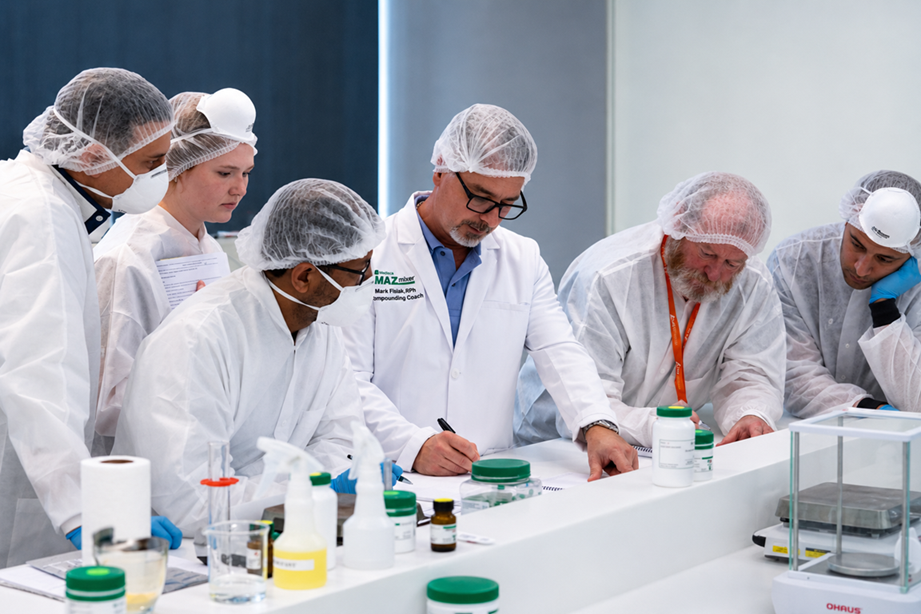
- Build and execute an education plan to train staff
- Create compounding workflows
- Source required ingredients and equipment, and update your lab layout, if necessary.
This process will create an entry point into compounding and equip the pharmacist with processes that can grow with their business.
The next level
The second starting point is a pharmacy facing growing requests from prescribers for custom formulations. The pharmacy seeks to replace ad hoc preparations with consistent, quality workflows.
Like the previous scenario, there are five steps a pharmacy in this position may need to complete. Unlike the first scenario, they may not all be required.
- Refine workflows to improve consistency
- Build or upgrade documentation structures to support higher compounding volume
- Review sourcing quality and improve if necessary
- Assess and upgrade equipment for greater efficiency
- Create expansion plan to manage increased volume.
All compounding activities must meet federal, state and professional practice standards.
Sterile-curious compounders
Almost all compounders begin with non‑sterile compounding because it’s simpler and lower risk to patients compared to sterile compounding.
The first steps to sterile compounding should always be education and structural planning before any operational commitments are made.
Sterile compounding is also highly specialised. It requires thorough research into the niche markets you’ll serve and the formulations you’ll prepare.
For example, risks associated with compounding eye drops are different compared to those of parenterals, as reflected in the expiry date constraints and quality assurance, quality control requirements.
A pharmacy ready to move into sterile compounding will also need to consider:
- High-level sterile orientation
- Training pathways for staff
- Readiness across staffing, facilities, and quality processes
- Equipment and workflow planning that meets their intended scope.
Tailored support
Customised solutions start with personalised conversations
While each path into compounding comes with unique questions and challenges, there are some universal themes.
Compounding performance depends on ingredients you trust, systems which perform as you expect, and education, tools and equipment that support precision.
The specific steps each pharmacy should take to achieve these ends will vary.
Compounders need to source active ingredients, excipients, bases and delivery systems.
They need packaging and dispensing solutions. They use mixers, moulds, labware, PPE, oral dosing tools, and more.
They need compliance‑minded documentation systems and suitable facilities.
The best combination of resources, solutions and systems will change with the pharmacy’s goals, resources, market, prescribers and patients.
Perhaps the best advice for the compounding curious, then, is this: connect with an expert you trust for a conversation about your pharmacy and your goals.
Speaking with an experienced compounder can help you find the path into compounding that works best for your pharmacy.
Where to from here
Compounding is a world unto itself, where the best compounders are lifelong learners.
Medisca publishes a range of introductory compounding resources, including our guide to getting started.
We offer seminars, PBA guideline summaries and dedicated staff to help you find the path into compounding that works best for you and your pharmacy.
For more information: https://www.medisca.com.au/your-startup-partner