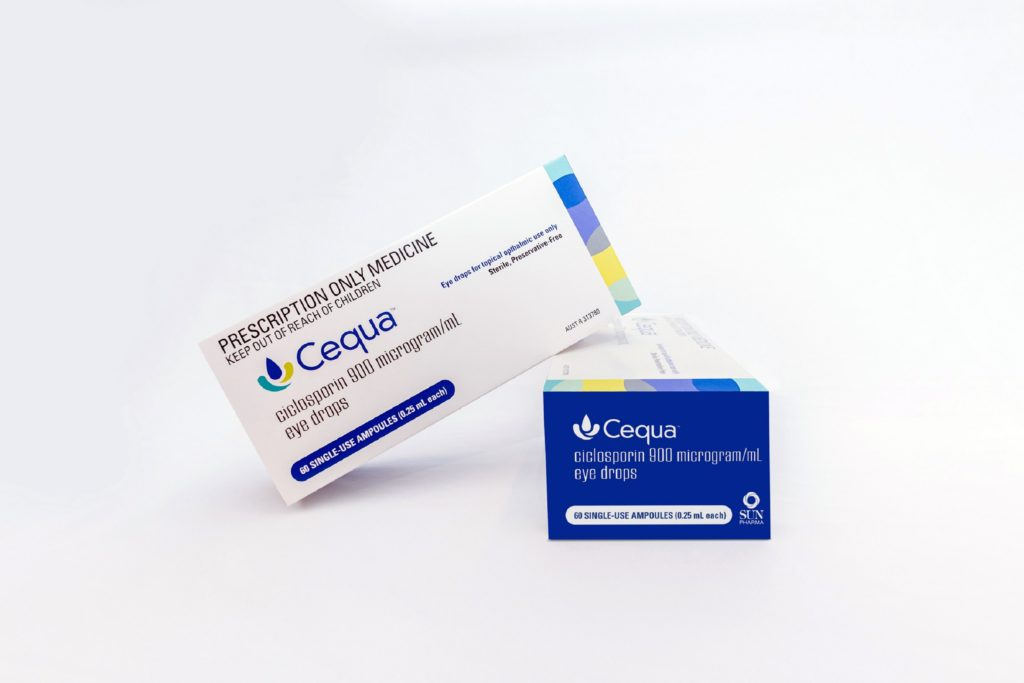
The PBS listing of CEQUA is based on two randomised, vehicle-controlled clinical studies, OTX-101-2014-001 and OTX-101-2016-00. Both studies demonstrated clinically and statistically significant improvements with CEQUA in tear production and ocular surface integrity in patients living with dry eye disease over 84 days (12 weeks). CEQUA significantly reduced the signs of dry eye disease rapidly, with noticeably reduced corneal staining at 28 days, and reduced conjunctival staining at 56 days. To achieve the best results, CEQUA is recommended to be administered consistently for at least three months.
According to leading Ophthalmic Surgeon, Dr Alison Chiu, Envision Eye Centre, Sydney, dry eye disease is a widespread and complex disease with a significant unmet clinical need.
“Dry eye disease is highly prevalent, affecting nearly 10 percent of the Australian population.As a leading cause of patient visits to both optometrists and ophthalmologists, the disease also places a substantial burden on the healthcare system.
“The management of dry eye disease is highly complicated because of its multifactorial aetiology. Ocular lubricants such as artificial tears are a mainstay of disease management, however only provide palliative relief and do not target the underlying pathophysiology of dry eye disease,” said Dr Chiu.
“Subsequently, one in five patients living with dry eye disease are dissatisfied with their overall treatment due to lack of symptom relief, the time taken to relieve symptoms and treatment side-effects.
“Ciclosporin was the first agent used in the treatment of dry eye to address the pathogenesis of the disease,13 and is recommended as one component of the Step 2 treatment regime for dry eye disease. However, the delivery method has been historically challenging,” Dr Chiu said.
“This PBS listing is particularly timely and will help Australia match the treatment options available overseas. As clinicians, we welcome the availability of another treatment on the PBS, to help address the current unmet need for this patient population living with chronic severe dry eye disease.”
CEQUA’s nanomicelles are formed using polymers that self-assemble into a hydrophobic core and a hydrophilic outer shell, enabling the ciclosporin molecules to overcome solubility challenges. This nanomicellar technology allows for a more than 10-fold increase in the aqueous concentrations of ciclosporin compared with ciclosporin 0.05% ophthalmic emulsion. Furthermore, the smaller particle size of CEQUA improves the bioavailability and physiochemical stability of the formulation, thereby enhancing delivery of ciclosporin to relevant ocular tissue. About CEQUA (ciclosporin 900 microgram/mL)
CEQUA (ciclosporin ophthalmic solution) 0.09% is a patented, proprietary nanomicellar formulation of ciclosporin in a clear, preservative-free, aqueous solution. The ciclosporin treatment is delivered with nanomicellar technology, which penetrates the aqueous layer of the tear film in the eye to deliver more ciclosporin to the ocular surface. CEQUA™ is administered topically, one drop in both eyes, twice daily (12 hours apart). CEQUA was approved by the Therapeutic Goods Administration (TGA) in 2020 to increase tear production for moderate to severe dry eye disease where prior use of artificial tears has not been sufficient and is available on the PBS from June 1, 2023 for a subsection of patients with chronic severe dry eye disease with keratitis.
CEQUA is available in a pack of 60 ampoules, constituting one month’s supply when administered as indicated. CEQUA patient starter packs are readily available in a pack of 10 ampoules, and are a useful way to start patients on CEQUA. Patient starter packs help clinicians identify >4% of patients who discontinue use due to instillation site pain.
About OTX-101-2016-00
OTX-101-2016-00 is a Phase 3, multicentre, randomised, double-masked, vehicle-controlled clinical trial assessing the efficacy and safety of CEQUA in patients living with dry eye disease who had a symptom score of 40 or more, and a lissamine green conjunctival staining score of 3 or more, and 9 or less in at least one eye. A total of 744 patients living with dry eye disease were treated with either CEQUA (n=371), or its vehicle (n=373). After 84 days (12 weeks) of treatment, CEQUA showed a statistically significant improvement in the primary endpoint – a greater percentage of participants in the treatment group achieved an increase in Schirmer’s score (a measure of both basal and reflex tear production) of 10mm or more after 12 weeks) (p<0.001), compared to the vehicle group. Moreover, a statistically significant improvement (decrease) in total conjunctival staining was observed in the CEQUA treatment group at days 56 (P<0.001) and 84 (P=0.007), respectively, compared to the vehicle group. CEQUA significantly reduced the signs of dry eye disease rapidly, with noticeably reduced corneal staining at 28 days (P<0.01).
A one-year extension study on the safety of CEQUA 0.09% supported the treatment. The safety endpoints included AE monitoring, Snellen visual acuity (VA), intraocular pressure (IOP), slit lamp examination (SLE), and dilated fundoscopy. In total, 745 and 258 patients were included in the treatment and safety extension phases, respectively. The AEs were predominantly mild, with instillation site pain representing the most frequently reported event, and no safety concerns raised by the VA, IOP, SLE, and fundoscopy endpoints. Overall, the long-term safety of CEQUA was supported by the study.
About OTX-101-2014-0017
OTX-101-2014-001 is a Phase 2/3, multicentre, randomised, double-masked, vehicle-controlled, dose-ranging clinical trial assessing the safety and efficacy of nanomicellar ciclosporin (OTX-101) in patients living with dry eye disease with a symptom score of 40 or more, and a total conjunctival staining score of 3 or more, and 9 or less. A total of 455 patients living with dry eye disease were treated with CEQUA 0.09% (n=152), OTX-101 0.05% (n=151), or vehicle (n=152). After 84 days (12 weeks) of treatment, clinically significant improvements (reductions) relative to vehicle were observed in the primary endpoint, conjunctival staining (a measure of epithelial disruption) (p<0.01), in both ciclosporin treatment arms. OTX-101 0.09% and 0.05% significantly improved the secondary outcomes in the patient population; specifically corneal staining and Schirmer’s test scores (P<0.01 for both concentrations). The AEs relating to CEQUA 0.09% were generally mild, with installation pain being the most common AE (15.1%).
About dry eye disease
Dry eye disease, also known as keratoconjunctivitis sicca, dry eye syndrome, and dysfunctional tear syndrome,is a multifactorial disease of the ocular surface characterised by a loss of homeostasis of the tear film, hyperosmolarity, and ocular surface inflammation and damage. As such, dry eye disease is often accompanied by ocular symptoms of discomfort, visual disturbance, burning, stinging, grittiness, foreign body sensation, tearing, ocular fatigue, redness, light sensitivity, and dryness.
Ocular surface damage associated with the disease is perpetuated by a vicious cycle, whereby hyperosmolarity triggers an inflammatory cascade, causing cellular damage, and further perpetuating damage to the ocular surface.
About Sun Pharma
Sun Pharma is a global leader in pharmaceutical supply and manufacturing, operating in over 100 global markets, with manufacturing sites in over 40 locations around the world. Sun Pharma ANZ has been present in Australia since 2005 through specialty pharmacy and hospital-focused product portfolios. Sun Pharma ANZ has also begun building an Innovator Medical Portfolio with a strong focus on dermatology, ophthalmology, oncology and fertility treatment. In Australia, the company also manufactures poppy-derived opiate raw materials primarily used in the manufacture of analgesics.