Assess before you dress
Ask the right questions
Pharmacists need to have an in-depth chat with the patient about their wound and symptoms. These questions can be used as a tool to help spark those conversations:
- What caused the wound?
- What are the patient’s symptoms?
- How long has the wound been there?
- How much pain is the patient in?
- Is the patient experiencing altered sensation or loss of movement?
- What action has been taken to previously to help with the issue?
- Has the wound made progress in healing?
- Is the patient’s immunisations up-to-date?
- Is the patient taking any other medicines?
Medical history
Ryan says reviewing a patient’s medical history is one of the most important steps in wound care because some conditions and medications, particularly anticoagulants and immunosuppressants, can increase bleeding or stop a wound from healing. Pharmacists should ask if a patient is taking prescribed, over-the-counter or complementary medicines.
Other factors which can delay healing include:
- Diabetes
- Impaired circulation
- Allergies and skin conditions
- Autoimmune conditions
- Malnutrition * Obesity
- Smoking
- Aging
Physical examination
Provided they are clinically competent, pharmacists should assess the following factors to distinguish between a superficial injury or one that needs further assessment.
- Size and depth of the wound
- Surrounding skin
- Tissues
- Fluid discharge
Alarming symptoms
Pharmacy staff must be alert if a patient is experiencing more serious symptoms, so they can be referred to a doctor. If symptoms are ignored, infected wounds can lead to complications, such as cellulitis, abscess and sepsis.
A patient needs to be referred if they have:
- Spreading redness
- Increasing pain
- Pus
- A deep / gaping wound
- A bite
- New diabetic foot wound
- A wound that isn’t healing or is recurring
For example, if an older person is repeatedly buying dressing for the same wound, they may need to be referred for clinical assessment to work out if there’s an underlying issue.
If a patient has severe or uncontrollable bleeding, they collapse or are confused, this should be treated as a medical emergency.
Wound management
Keep it clean
Pharmacists should clean the wound according to its presentation. Saline is suitable for a clean, healthy wound, while alternative cleansers, such as super-oxidised solutions, might be more appropriate in other cases.
Choose the right dressing
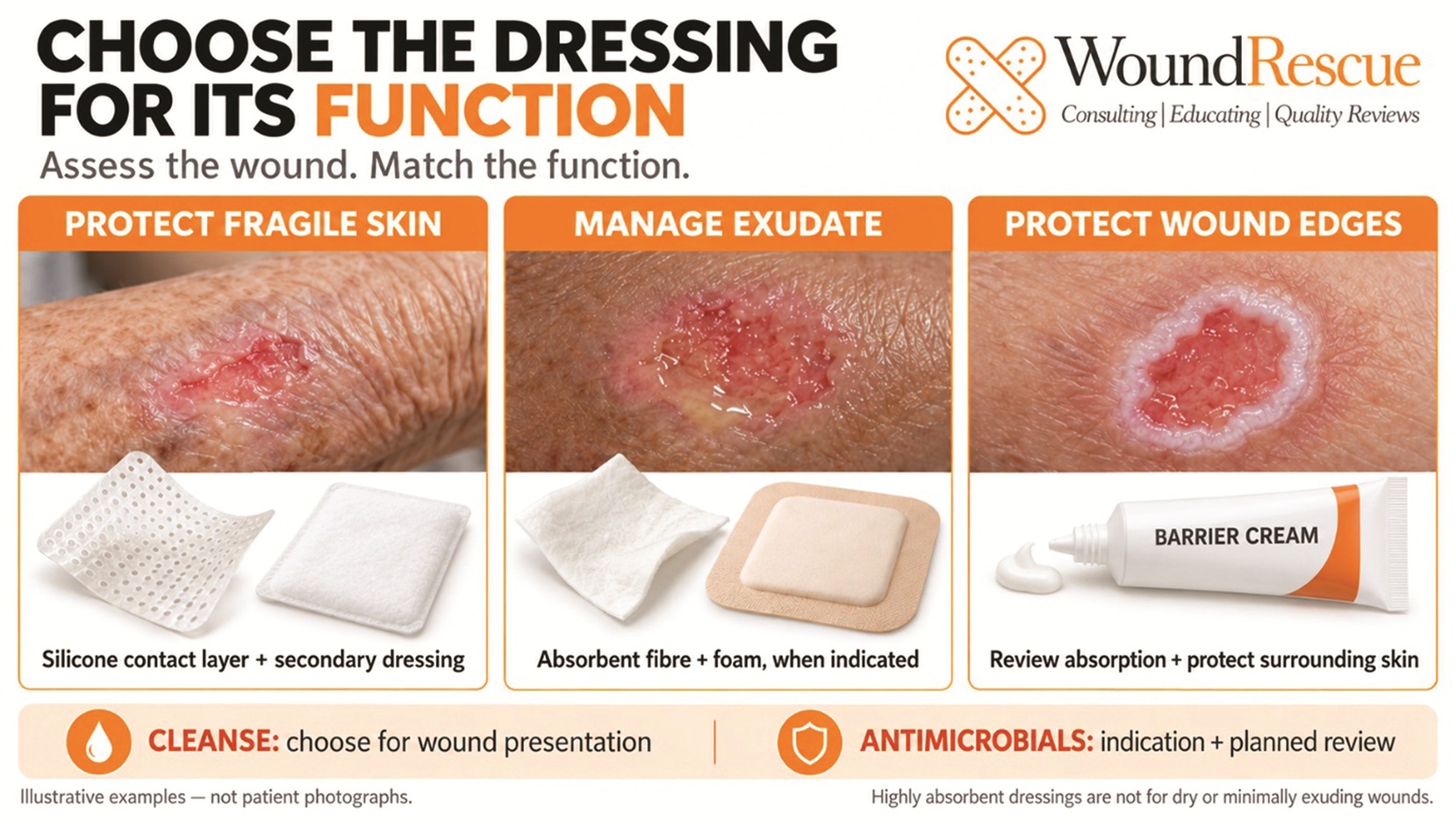
Pharmacists need to understand the role of each part of the dressing, including what comes into contact with the wound, what absorbs fluid and how it’s secured. Ryan says strong adhesives can damage older and fragile skin, while inadequate absorption can leave wound edges white, soft and vulnerable to breakdown.
- Superficial wounds: use a soft silicone contact layer to protect fragile skin. This can reduce pain and further damage during dressing removal. Include a suitable secondary dressing to manage drainage.
- Moderately exuding wounds: use an absorbent fibre dressing covered by foam to help maintain moisture balance and protect the wound.
- Dry or minimally exuding wounds: avoid using highly absorbent products as they are unsuitable for these wounds.
- Antimicrobial dressings: only use when clinically indicated. Plan to reassess the wound, rather than routinely using them for every cut and graze.
The image is a visual guide from WoundRescue, featuring various types of dressings and their specific functions, such as protection, exudate management, and antimicrobial properties, along with instructions for appropriate dressing selection based on wound conditions.
Pain relief
Pharmacists can assess when an analgesic is appropriate for pain relief and if a patient can take it safely in conjunction with other medications they’re taking. If a patient’s pain is increasing, this could be a sign they need further assessment, rather than stronger pain relief.
Schedule a review
Ryan says not all dressings need to be changed daily, and unnecessary removal can damage healing tissue and be painful. Pharmacists should provide patients with instructions on how to safely change the dressing at home and schedule a follow up assessment to check the wound is healing well. It’s important to know if a patient has access to sufficient supplies and understands when they need to seek medical help.
Connect with specialist support
Pharmacy staff don’t need to operate a dedicated wound clinic to play an important role in wound care, Ryan says. Specialist providers, such as Wound Rescue, offer training and education to pharmacists wanting to upskill, and can assist in providing access to telehealth and onsite wound consultations.