Patients and the Pharmacy Guild of Australia will continue advocating for a freeze to the PBS co-payment at $25 till 2030 until it becomes a reality, arguing people already struggling with household costs should not find themselves paying more for medicines they need.
The Australian reports that senior government figures have endorsed a move to keep the maximum general patient co-payment for PBS medicines at $25, rather than allowing indexation to push the price higher from 1 January.
The potential freeze comes as the Albanese Government considers further cost-of-living relief ahead of the Mid-Year Economic and Fiscal Outlook.
For patients who have been calling for the $25 price to be protected, and for the community pharmacists who see the impact of medicine affordability firsthand, the development is encouraging.
But until a freeze is formally adopted, patients and the Guild will continue making the case for it.
Australians want medicines kept at $25
There is overwhelming community support for protecting the lower price.
New research commissioned by the Pharmacy Guild and conducted by Insightfully found 85% of voters want the $25 maximum PBS co-payment maintained.
The research, conducted in two blocs across October and November with a combined sample of 6,113 people, also provides a stark indication of why medicine affordability remains important.
Some 29% of people with chronic illnesses reported having been unable to afford a prescribed medicine. Among Australians with dependants, 23% reported having been unable to afford a prescribed medicine. And among people without concession cards, 16% of Australians aged 18 to 34 said they or their family had been unable to purchase a prescribed medicine because of cost during the previous three years.
Behind these figures are people making difficult choices as housing, food, energy and other everyday costs compete for limited household budgets. Medicines should not be one of those choices.
For a person managing diabetes, asthma, high blood pressure or another chronic condition, filling a prescription is not discretionary spending. Yet the research suggests cost continues to be a barrier to accessing prescribed treatment.
Cost-of-living relief at the pharmacy counter
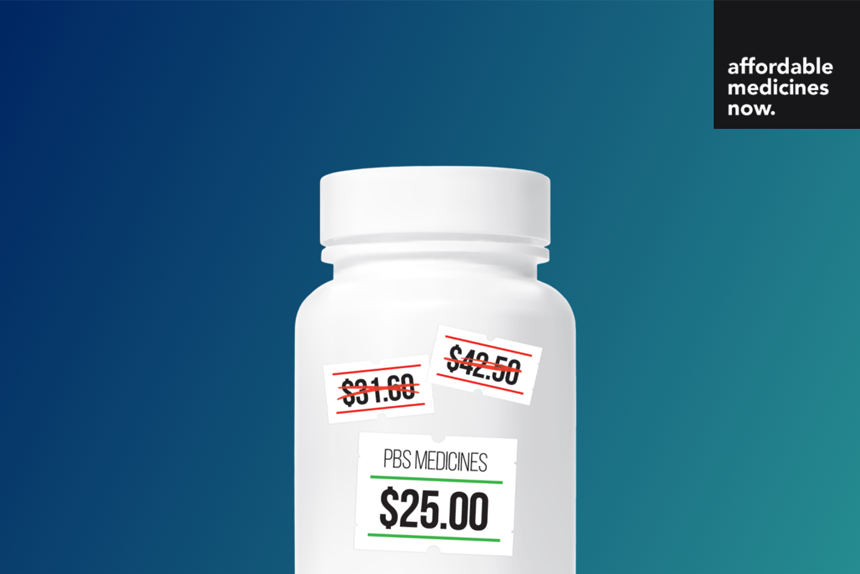
The maximum PBS general patient co-payment was reduced from $31.60 to $25 on 1 January 2026, following an earlier reduction in 2023. The latest reduction brought the maximum cost of PBS medicines for general patients back to levels not seen since 2004.
By August 2026, Australians had saved more than $130 million on their healthcare costs through cheaper PBS medicines.
The question now is whether that relief will be protected.
Without government intervention, indexation would see the $25 maximum general co-payment begin to rise again.
Pharmacy Guild National President Professor Trent Twomey said increasing the price of medicines would move in precisely the wrong direction when Australians continue to face cost-of-living pressures.
“Putting up the price of essential medicines in January would take us in exactly the wrong direction. In almost 80 years of the PBS, only one government has cut the general co-payment – and the Albanese government has done it twice.
“Bringing medicines down to $25 provided practical cost-of-living relief for millions of Australians,” Professor Twomey said.
“Australians are sending a very clear message – the government needs to act on cost of living. Freezing the price of medicines provides effective cost-of-living relief for millions of Australians taking regular medicines.
“Keeping PBS medicines at $25 until 2030 would give Australians certainty that this essential household cost isn’t going to keep climbing with inflation.”
Medicines aren't discretionary
For pharmacists, the statistics about medicine affordability reflect something they can encounter in their pharmacies: patients trying to manage healthcare alongside other household expenses.
When money is tight, people may delay filling a prescription or struggle to meet the cost of their regular medicines.
It is precisely the outcome patients and the Guild want to prevent.
Professor Twomey said younger Australians and families were among those continuing to struggle.
“Every dollar matters … younger Australians and families are telling us they are still struggling to afford the medicines they need.
“Medicines aren’t discretionary. People can put off a holiday or buying a new television, but they shouldn’t have to put off treating diabetes, asthma or high blood pressure because the family budget doesn’t stretch far enough.”
The argument for a freeze is therefore about more than keeping one household bill down.
Making prescribed medicines affordable helps patients access the treatment they need and supports medicine adherence. It also reduces the risk that financial pressure today contributes to poorer health outcomes and greater demands on the health system tomorrow.
Relief without the wrong choices
The reported consideration of a freeze comes as the Government works on measures designed to provide further cost-of-living support while managing pressure on federal spending and inflation.
Treasurer Jim Chalmers has identified cheaper medicines and greater bulk billing among the measures that can provide targeted relief.
Prime Minister Anthony Albanese has also pointed to cheaper medicines as an example of assistance that helps households without encouraging discretionary spending.
People do not decide to fill additional prescriptions because medicines become cheaper. They fill the prescriptions they need.
That distinction is important at a time when the Government is trying to balance further cost-of-living support against inflationary pressures.
Keeping the PBS co-payment at $25 would put relief directly into the budgets of Australians who need medicines, while helping them maintain their health.
Turning speculation into certainty
For patients and pharmacists, the reports that the Government is considering a freeze are a welcome development.
They are not, however, the end of the story.
The Guild has advocated for the $25 co-payment to be frozen in concert with patients because medicine affordability remains a genuine issue for Australian households.
That advocacy will continue until patients have certainty.
The polling gives the Government a powerful indication of the community's position.