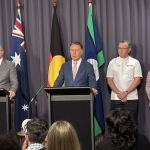
Federal Health Minister, the Hon. Mark Butler MP, Shadow Health Minister Senator the Hon. Anne Ruston and Pharmacy Guild of Australia National President Professor Trent Twomey addressed guests in the Great Hall at Parliament House on Monday 23 November, with the future of community pharmacy firmly on the agenda.
While the speakers approached the issues from different perspectives, two themes ran through their addresses: keeping the cost of PBS medicines down for Australian patients and making better use of pharmacists' skills across the health system.
The dinner came in the wake of the announced reduction in the maximum general PBS co-payment to $25 this year and confirmation that the price will remain frozen at that level until 2030.
Professor Twomey described the $25 co-payment, the lowest price since 2004, as an important win for Australian patients.
“This is a win for Australians, made possible with the support of every MP, Senator, stakeholder, patient and community pharmacist who fought to keep medicines affordable,” he said.
“Thank you.”
Affordability delivers health benefits
For Minister Butler, reducing what Australians pay at the pharmacy counter was about more than household budgets.
He said Australians had saved $3.3 billion in out-of-pocket pharmacy costs over the past four or five years.
“That’s obviously terrific for the household budgets but it’s also good for the health of Australians,” he said.
“It means Australians are taking the medicines that they need to stay healthy and to continue to live productive, healthy, contributing lives.”
Senator Ruston also reinforced the Coalition’s support for keeping medicines affordable, saying Australians should not be forced to forgo medicines because they could not afford them.
“The Coalition will support the indexation pause because we know Australians should not be going without their medicines because of cost,” she said.
The Shadow Health Minister also pointed to community pharmacy’s reach as one of its greatest strengths.
Addressing the Guild, she said its effectiveness was grounded not simply in its political advocacy but in the presence of around 6,000 community pharmacies across Australia and their connection with patients.
“On average an Australian walks through your door 18 times a year and that makes you the most accessible health professional in the nation by an absolute country mile,” she said.
Guild members know that this reflects a century of care.
The next reform
With the cost of medicines receiving support from both sides of politics, attention also turned to what comes next for pharmacy.
Scope of practice featured prominently in all three speeches.
Minister Butler argued that workforce pressures made it increasingly important that health professionals were able to make full use of their training and expertise.
“There are many, many more things for us to do,” he said.
“We’ve talked a lot about scope of practice over the last few years. I’d say to the professions that it doesn’t make sense at a time of rising demand and constrained supply of health workers that we don’t extract every ounce of skill, experience and training from every health professional we can.
“And pharmacy is probably taking that on more quickly than any of the other professions.”
Senator Ruston similarly backed pharmacists working to their full scope, saying the profession had been on the journey towards full scope of practice for many years.
Importantly for pharmacists, she also questioned why the cost of a medicine should depend upon which type of health professional issued the prescription.
“The cost of a medicine should not be determined by which type of professional prescribed or wrote the script,” she said.
“It isn’t about replacing anyone but using the skills we already have so Australians can get access to what they need, when they need it and where they need it.”
Her prescription for accelerating reform was blunt: “The bureaucrats do need to get out of the way.”
‘We are not your assistants’
Professor Twomey used his address to push the scope-of-practice discussion further, describing autonomous prescribing by pharmacists as part of the profession’s “unfinished business”.
He pointed to the direction given by health ministers to the Pharmacy Board of Australia to develop an endorsement for scheduled medicines, and to pharmacy prescribing initiatives already undertaken across Queensland, New South Wales, Tasmania, South Australia and Victoria.
“This allows for a focus on autonomous prescribing by pharmacists like in the UK, Ireland, Canada and New Zealand,” he said.
Professor Twomey said six pilots had involved thousands of patients without adverse clinical outcomes.
But he also emphasised that autonomous practice did not mean pharmacists working in isolation from the rest of the health system.
“Every day pharmacists work alongside other healthcare professionals to deliver the best care for our patients,” he said.
“And of course, we work particularly closely with GPs. When we share the care of a patient, we both have an obligation to communicate.”
Professor Twomey said pharmacists had “nothing but respect” for their medical colleagues but argued collaboration between professions needed to be based on professional independence.
“Respect and collaboration do not mean subordination,” he said.
“Pharmacy is an independent, self-governed health profession, like many other health professions. Pharmacists have their own university education, professional standards, clinical training and continuing professional development.”
He contrasted the highly skilled pharmacy assistant workforce developed within community pharmacy with suggestions that pharmacists should operate as an adjunct to the medical profession.
“It seems to me that medical lobby groups tend to think and treat pharmacists and other health professionals as though we are the medical profession’s paraprofessional workforce.
“We are not. If your doctors need physician assistants in their practices, build that workforce.”
He also reiterated that pharmacists were not seeking access to the Medicare Benefits Schedule as part of their expanded role. “Pharmacists don’t want or need access to the MBS. Pharmacists are your partners in primary healthcare. We are not your assistants”, said Professor Twomey.
A shared direction
The speeches revealed significant areas of agreement at a time when cost-of-living pressures and demand on Australia's health system remain firmly in the political spotlight.
There was bipartisan backing for ensuring the cost of medicines does not become a barrier to patients taking the treatment they need.
And on scope of practice, the message from the Government, Opposition and the Guild was increasingly aligned: Australia has a highly trained and accessible pharmacy workforce whose skills can be used more fully.
For community pharmacists, the challenge now is turning that political recognition into a nationally consistent model that allows pharmacists to practise autonomously to the full extent of their education and training, while continuing to work collaboratively with GPs and other health professionals.
If affordability has been one of pharmacy’s major policy battles of recent years, the message from Parliament House was that full scope of practice remains very much unfinished business.
Looking back to look forward
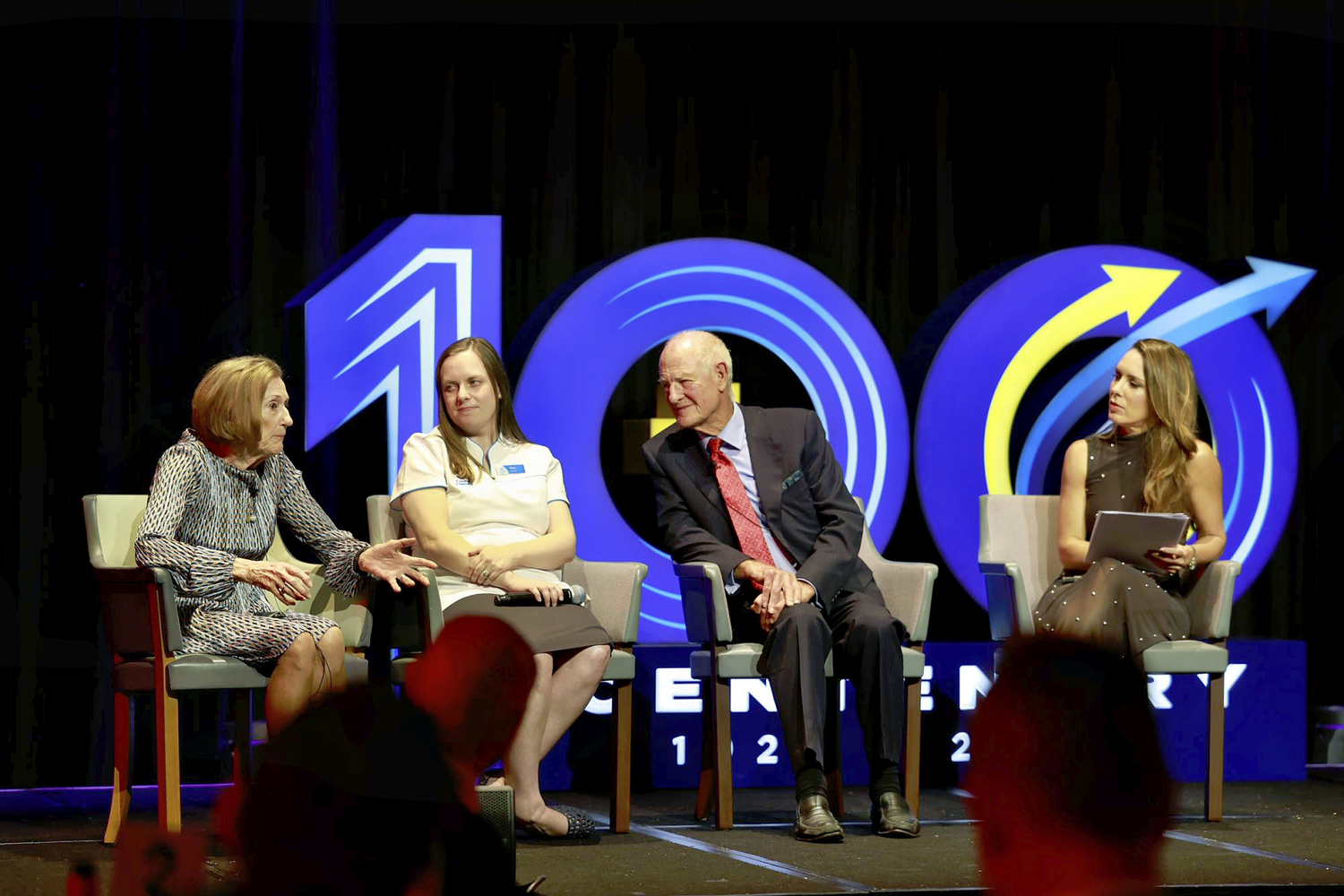
A fireside chat brought the Guild’s past, present and future together, with former Executive Directors Rob Davies and Wendy Phillips joined by Canberra community pharmacy owner Elise Apollini.
Moderated by Laura Jayes, the discussion reflected on the establishment of the first Community Pharmacy Agreement, the evolution of the Guild’s relationship with government, and the lessons from those changes that remain relevant as the Guild enters its second century.
The conversation then turned to the future, with a particular focus on patients and the changing role of community pharmacy. Elise Apollini was asked what Australians should be able to access through their community pharmacy in the years ahead, and whether the health system is making full use of pharmacists’ skills to provide the care patients need.
The discussion captured one of the key themes of the evening: celebrating how far community pharmacy has come while keeping a clear focus on what comes next, including enabling pharmacists to practise to the full extent of their education and training
Together we are creating healthier communities
For the sector, the Annual Parliamentary Dinner in Canberra was also an opportunity to bring people together - to begin a year of celebrations marking its Centenary.
In 2027, with an eye firmly on its future and required reforms, the Guild will bring together members, patients, communities and partners from all over Australia to share stories from across the profession - recognising the people, pharmacies and communities that have helped make community pharmacy what it is today.
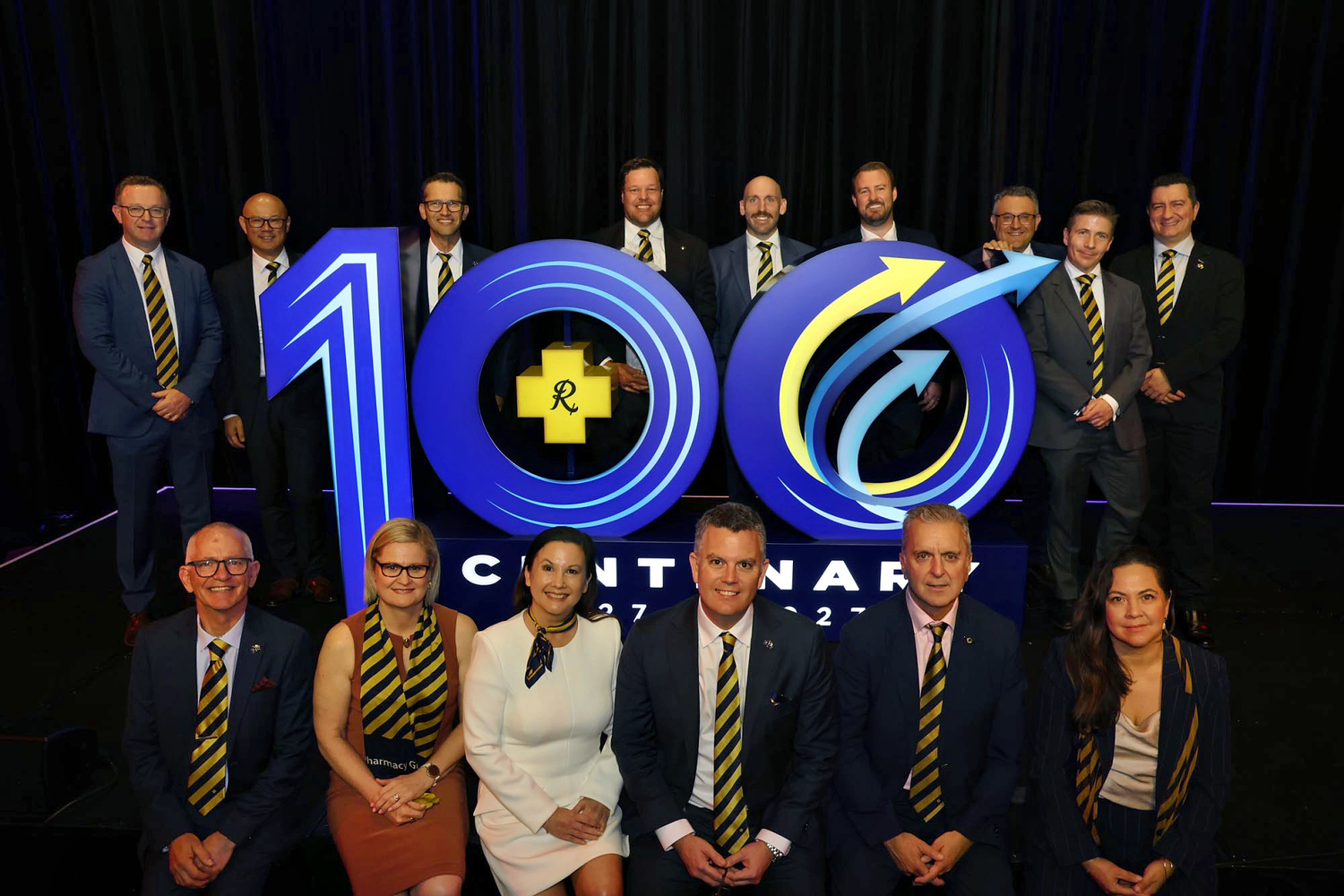
National Council highlighting the Guild’s centenary in 2027.
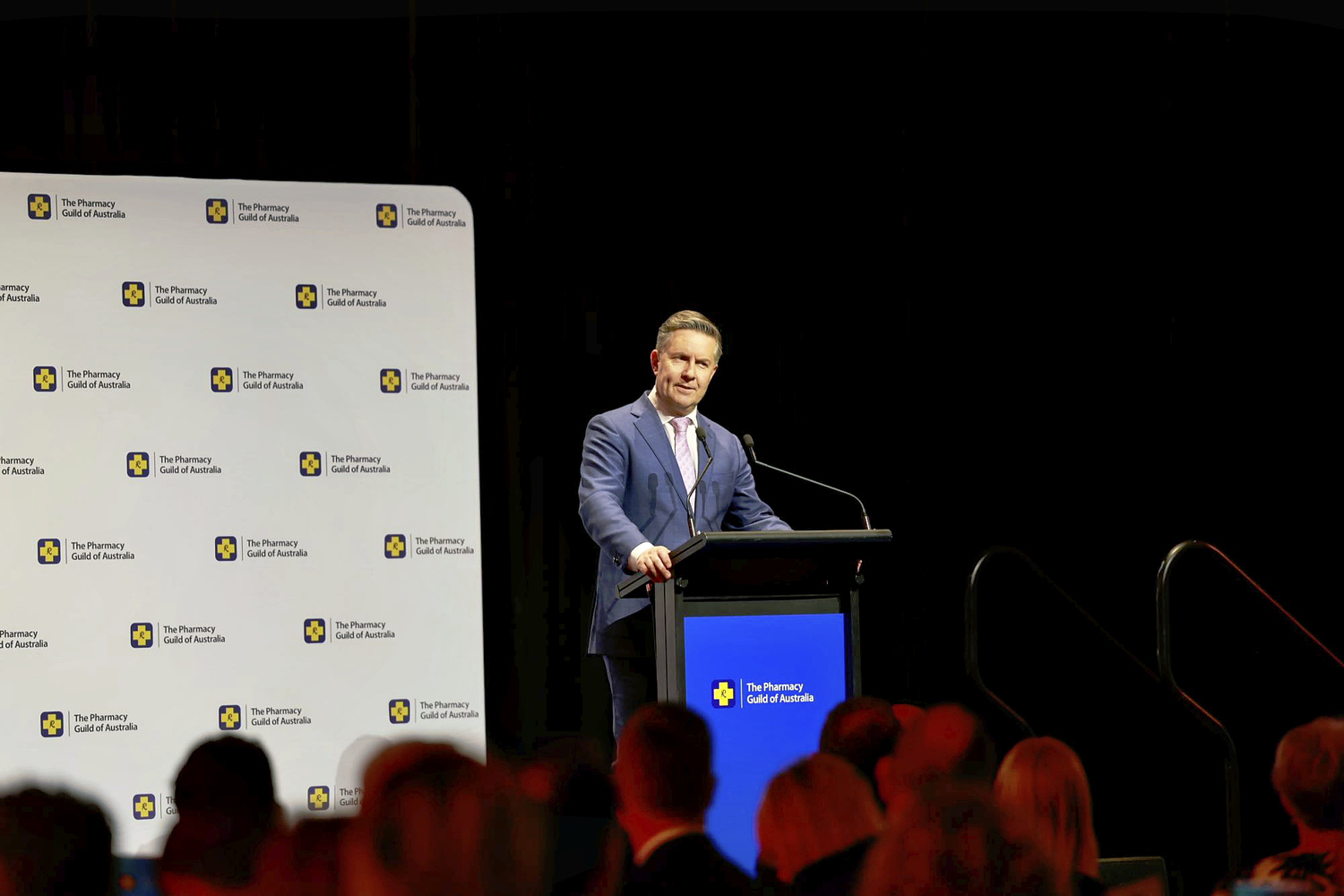
The Hon. Mark Butler MP, Minister for Health speaking at the Guild Annual Dinner on Monday night.
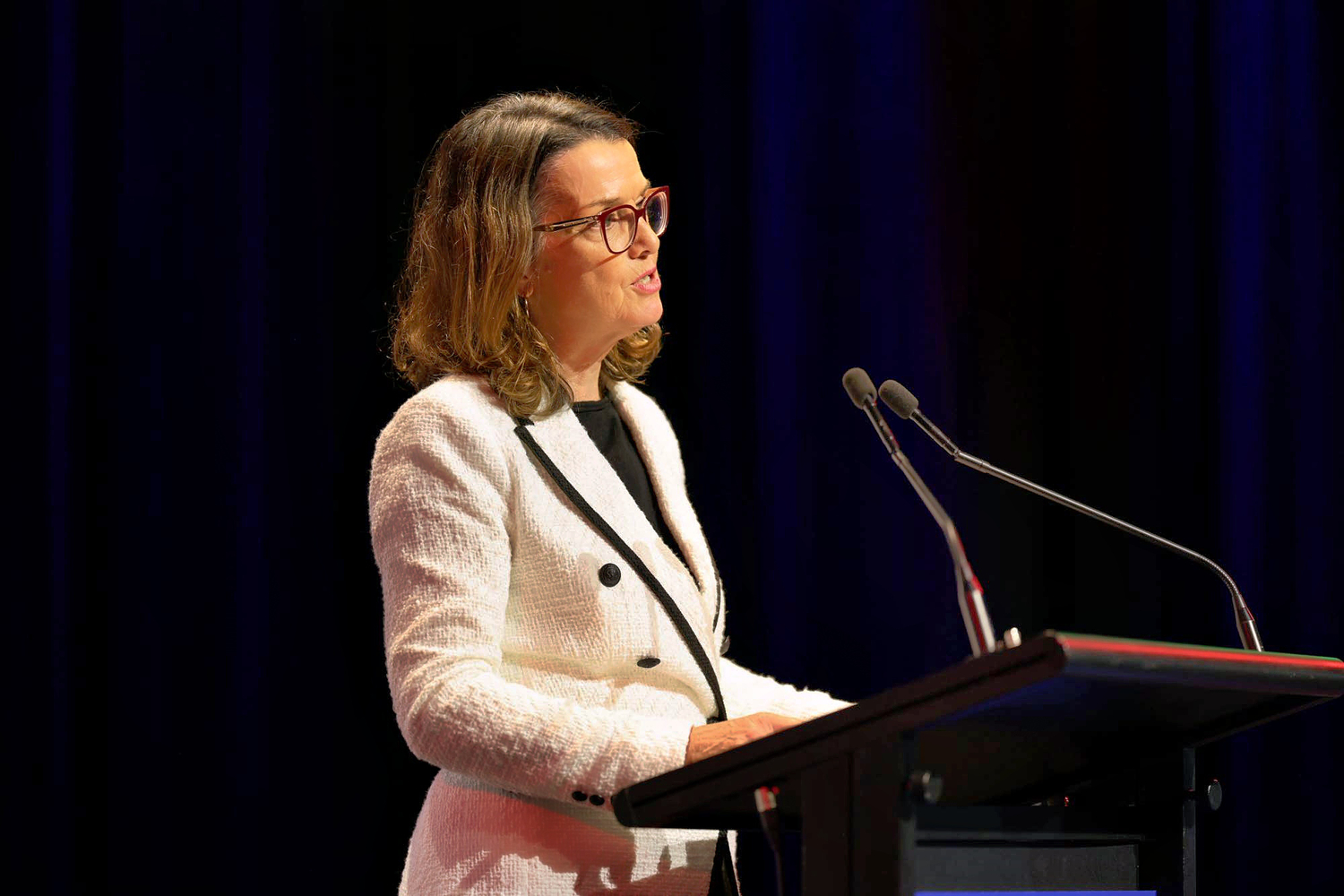
Senator the Hon. Anne Ruston, Shadow Minister for Health, confirms support for the $25 freeze on the copayment.
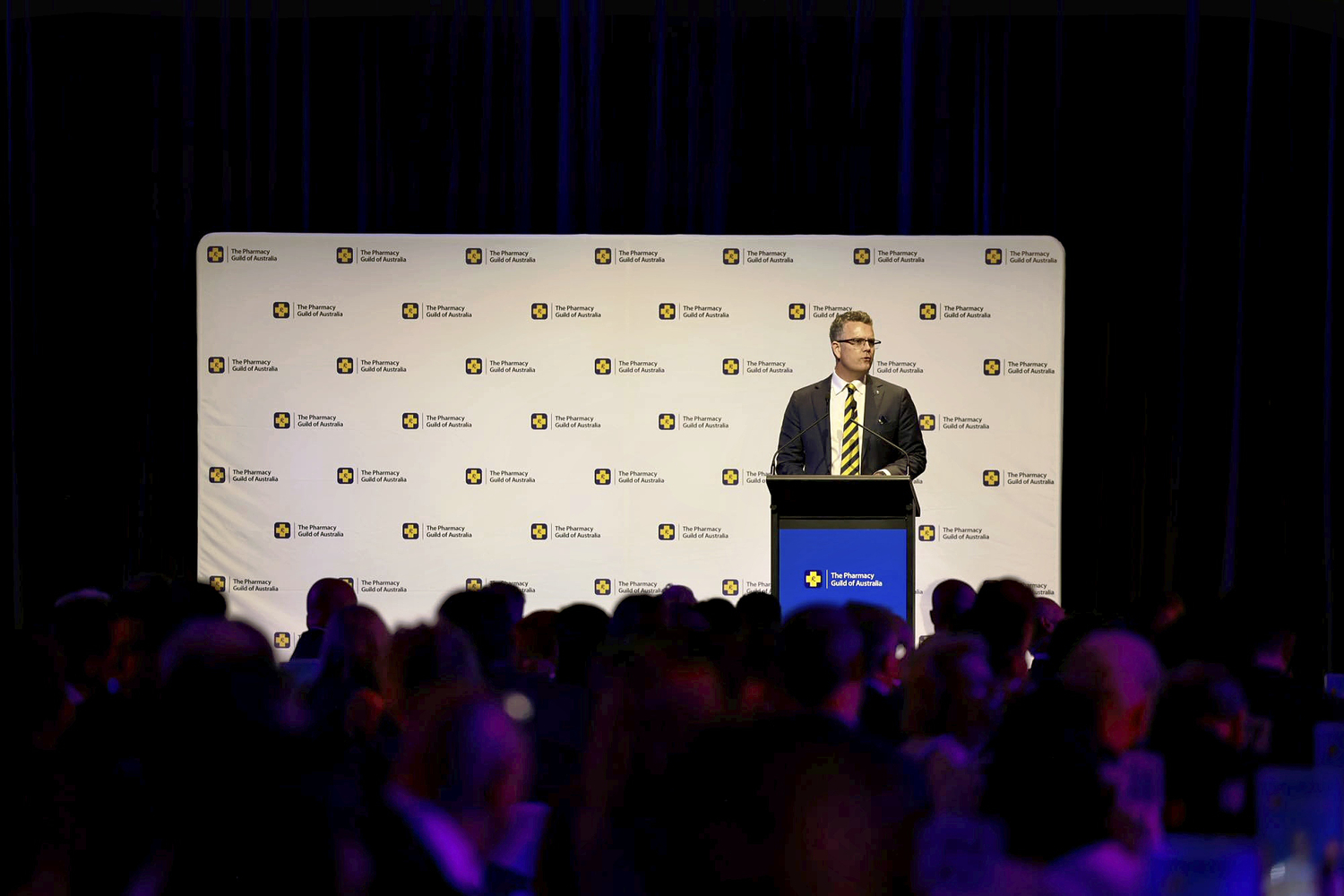
Professor Trent Towmey, National President, addressing members of parliament, patients, pharmacy colleagues and friends at the Parliamentary Dinner.