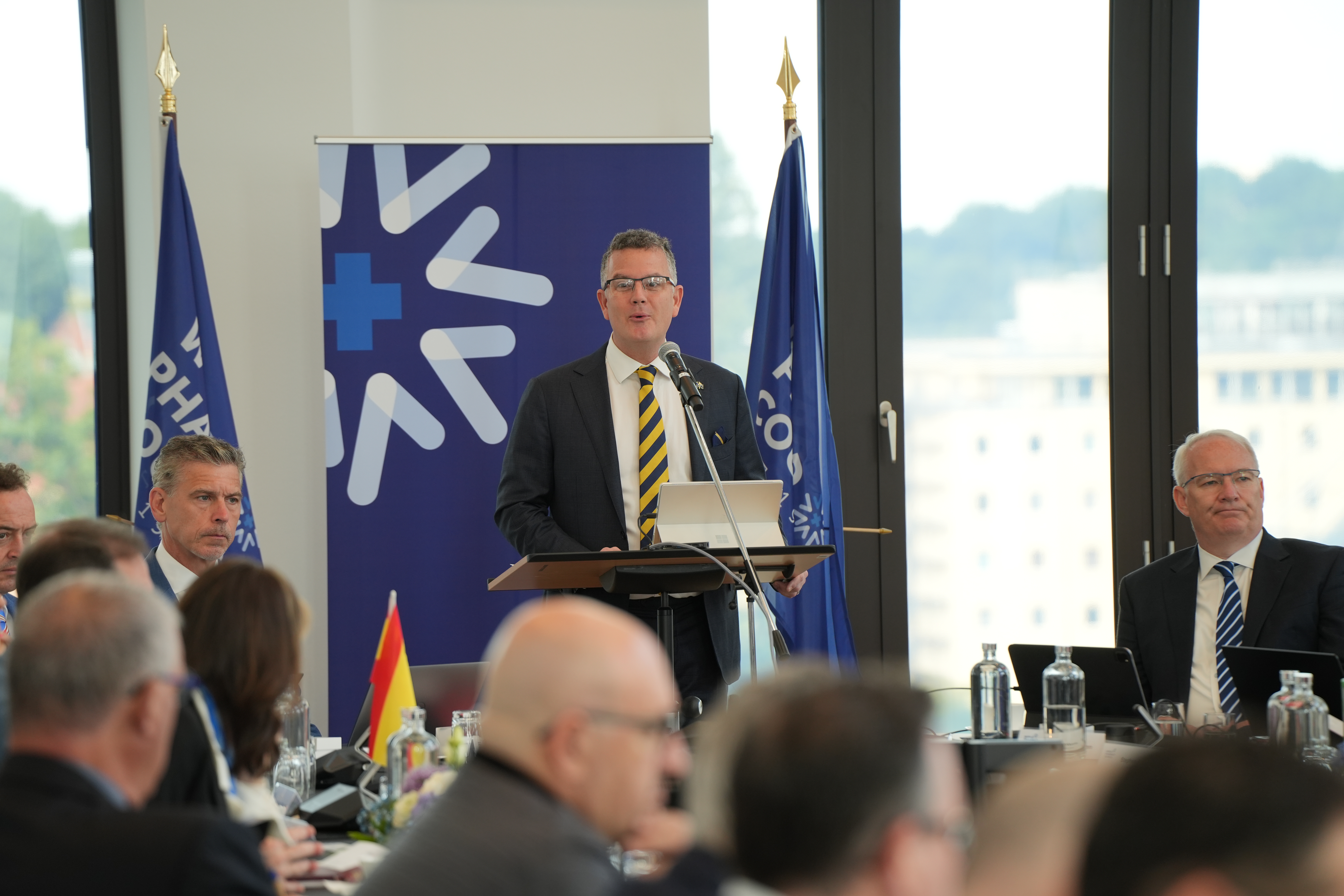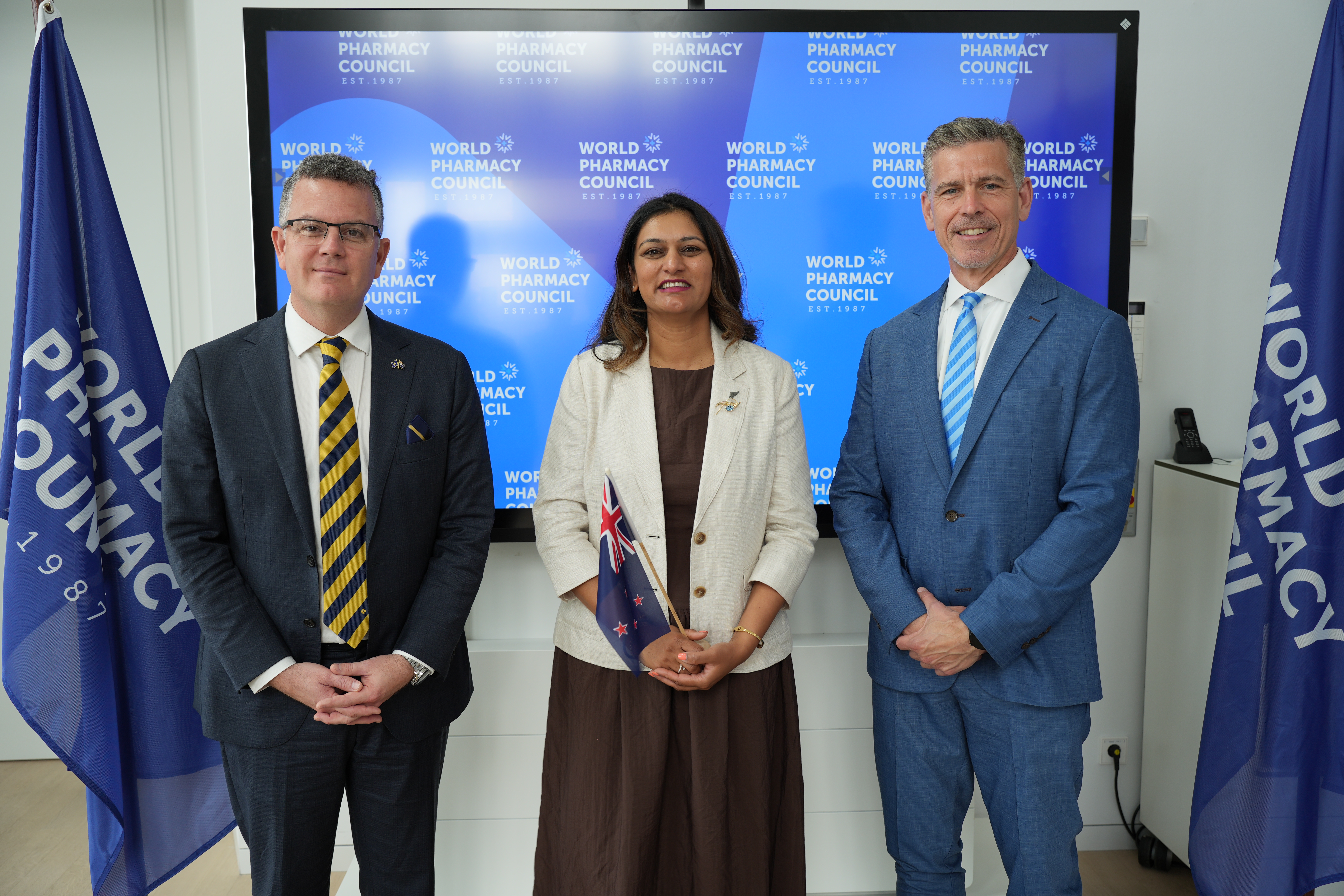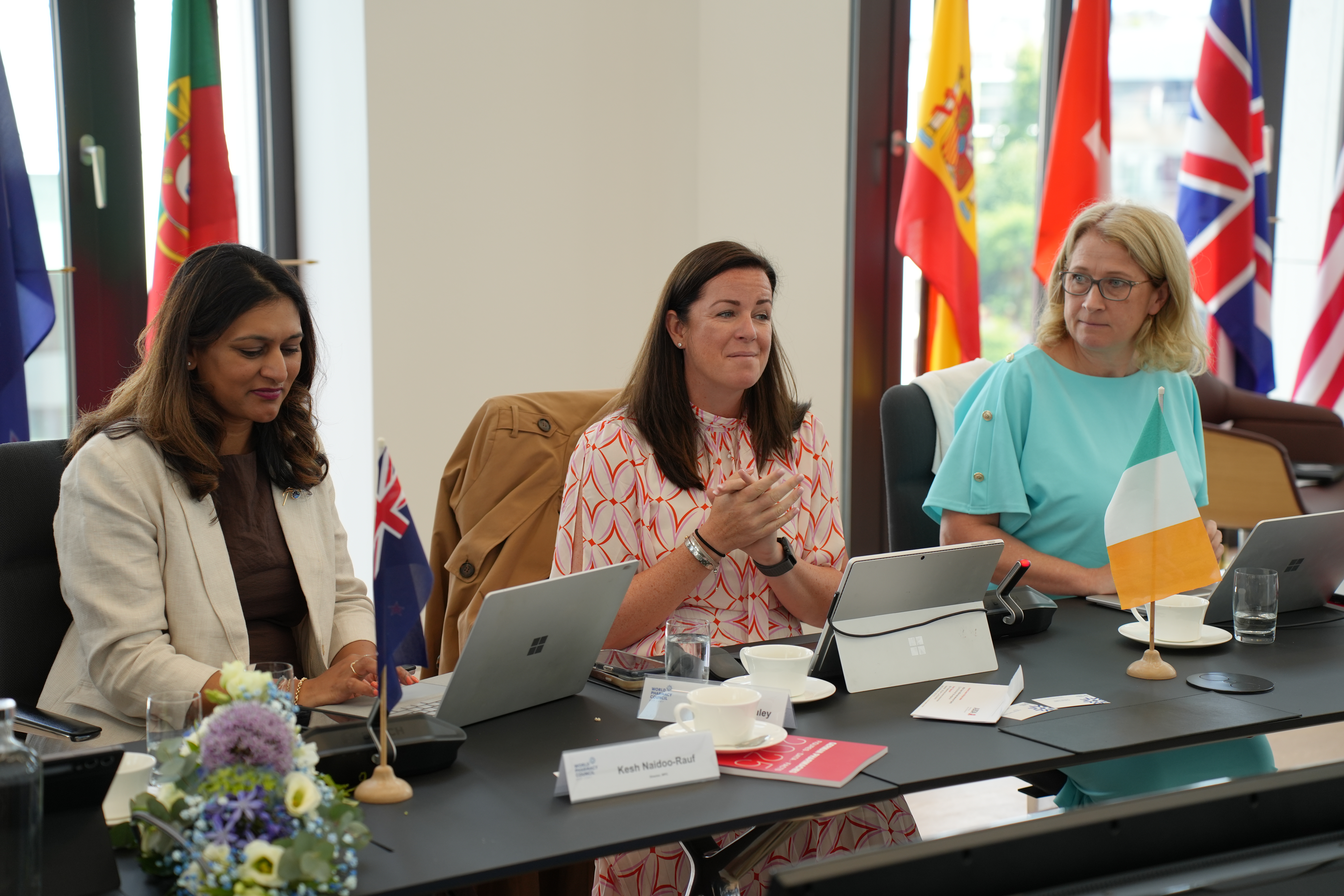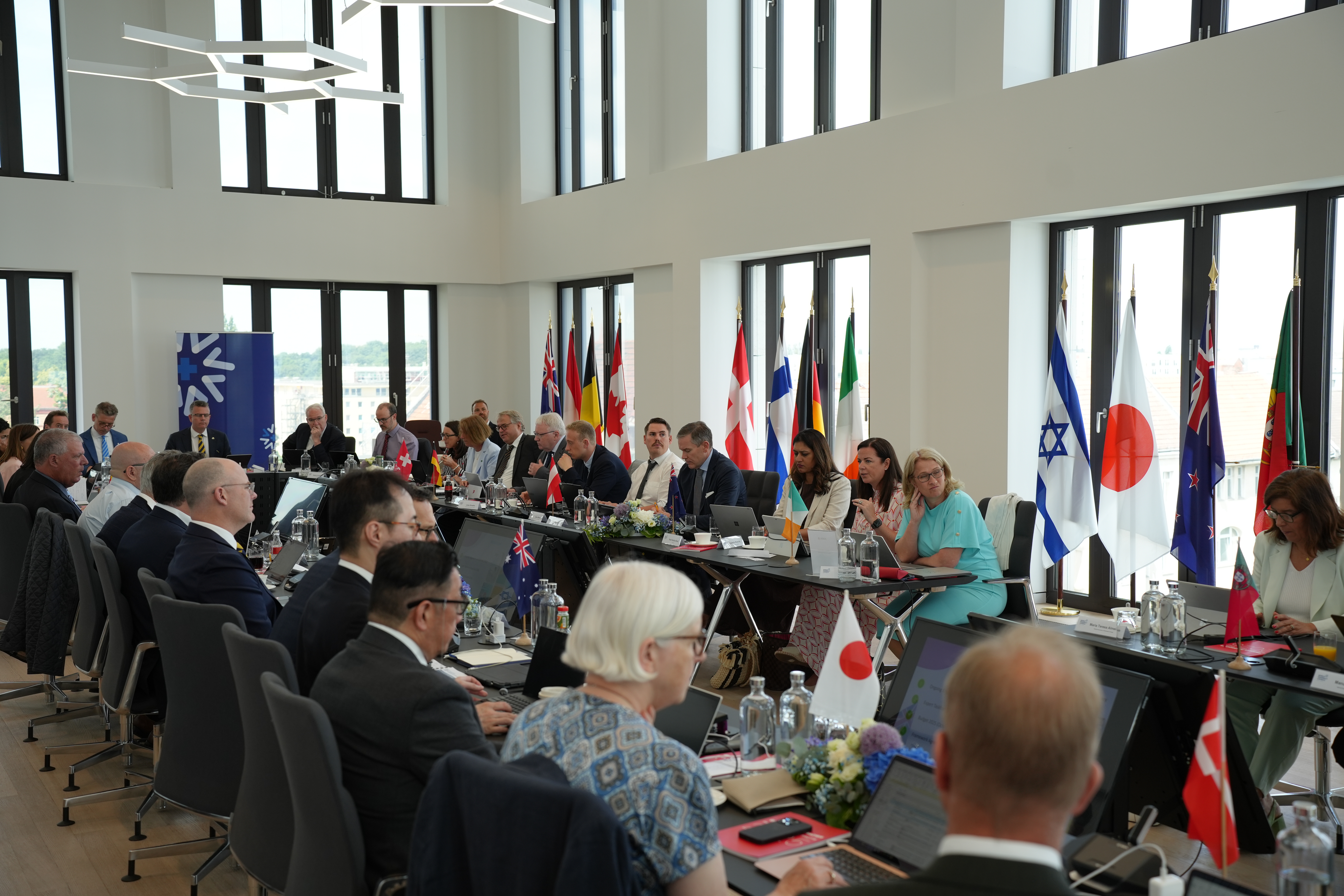
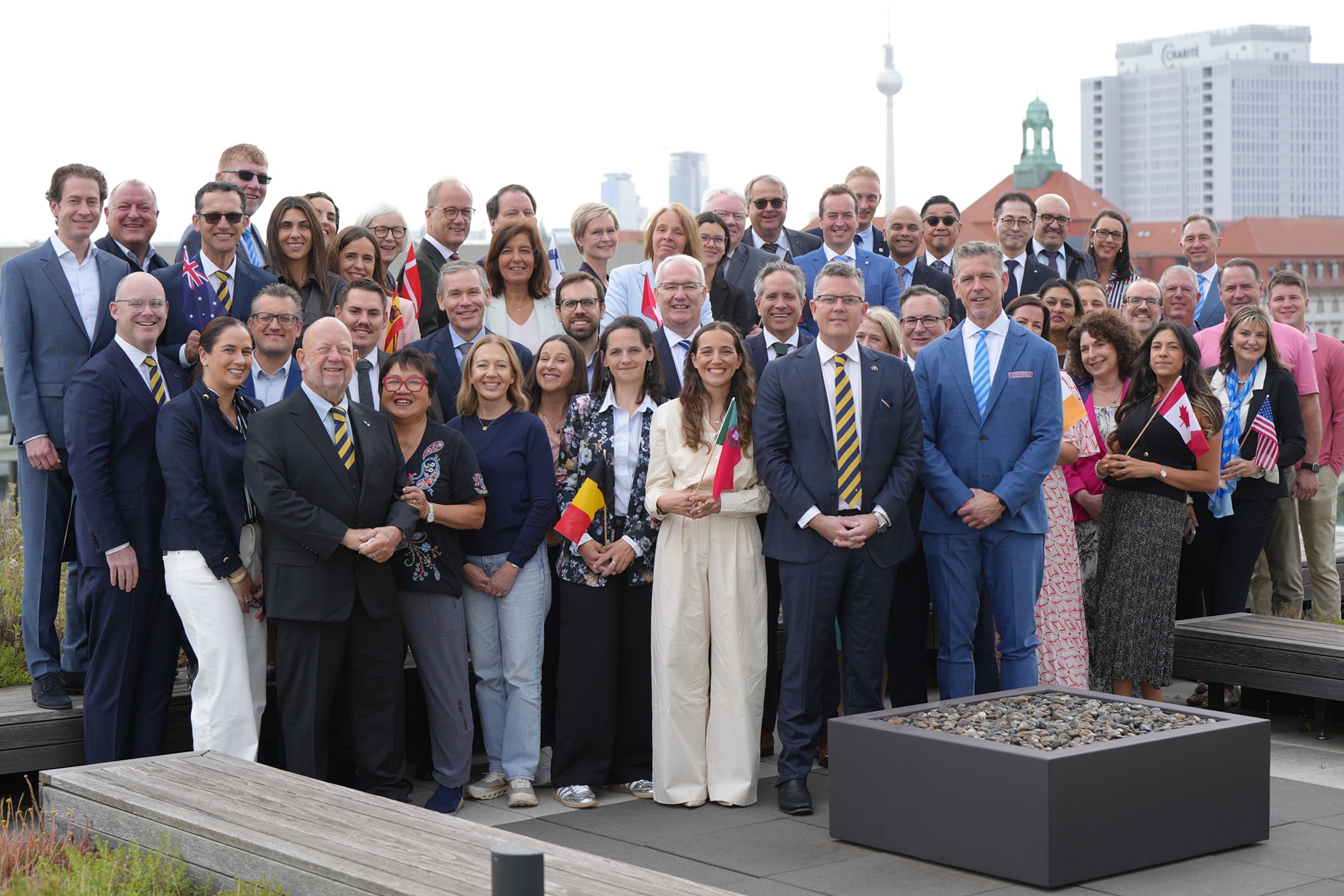
This year, the World Pharmacy Council’s annual conference – the 39th “Pharmintercom” – was hosted at the Berlin headquarters of ABDA, the Federal Union of German Associations of Pharmacists.
Senior representatives – mostly presidents and CEOs – from all 14 member countries attended, joined by guests from Austria and Switzerland, with the meeting chaired for the first time by the Council’s new President, Professor Trent Twomey.
Welcoming us, ABDA’s President, Thomas Preis, made comments that would carry through the days that followed: the Council’s “exchange of best practices and the discussion of challenges, opportunities and possibilities for the further development of community pharmacy” is, he said, “more important than ever.”
A front seat
I have been fortunate to take part in 12 of these conferences since 2012, and to contribute to several others through management of the Council’s data, economic analysis and reporting.
It is a privilege which has grown richer each year, including through the addition of new member countries.
There are very few settings in which the senior leadership of an entire global sector will speak to one another with real candour. It is a dynamic that only happens at this event — better described, perhaps, as a high‑level summit than a conference.
That candour is important. The discussions are deliberately held in confidence.
This is not secrecy for its own sake, but to create an environment which allows leaders to be honest and open about what is working at home and, just as importantly, what is not.
I cannot report what was said by individual members, but I can reflect on the shape of it, and on what it suggests for the years ahead.
An unrivalled indicator
The conference opens with a full day of country reports — a nine‑hour download covering the global community pharmacy landscape.
Each national leader takes the floor to set out what the past year has brought at home: the patient benefits gained, and those at risk; reforms implemented or on the horizon; negotiations underway or completed; the experiences that worked, and those that did not.
To hear the leaders of the community pharmacy sector across four continents account for their year in their own words is an education available nowhere else.
For someone in my role, it is also an unrivalled indicator of where the sector is heading – and what may need to change to face emerging and future challenges.
Two broad themes ran through these reports. On one side sits an almost universal expansion of clinical services: community pharmacists are vaccinating, prescribing, testing and managing conditions that not long ago were not considered by authorities to be within their remit.
In doing so they are showing how they can add greatly to healthcare system efficiency and patient accessibility.
On the other side sits the hard question of financial viability: whether the economic model can be held together to deliver on that promise.
The pressure on viability is visible in the numbers: delegates in Berlin needed to look no further than Germany, which recorded 578 pharmacy closures against just 48 openings in 2024 (the largest net loss on record).
A little further away, in England, pharmacy numbers have fallen for seven consecutive years, with closures most prevalent in economically deprived areas.
In this context, a strong theme at Pharmintercom was the importance of maintaining physical, brick‑and‑mortar pharmacy networks.
Bricks and mortar
There was a clear sense among the leaders in the room that a well‑distributed network of bricks‑and‑mortar pharmacies, staffed by a skilled and trusted workforce, is not a vestige of the past, and is also not something to be defended purely out of sentiment or tradition.
It is a vital component of health‑system infrastructure which has implications for national and social security as well as for local communities — and is more vital than ever given the current and future challenges that health systems will face.
The rise of remote, online‑only and ‘cherry‑picking’ dispensing models came up as a disruptive force.
The short‑sighted economics which make them attractive to some overlooks what is lost when care is detached from a local, accessible, physical presence:
- continuity, trust, and the regular, in‑person clinical contact which so often catches a problem early;
- the immediacy of access to medicines, services and advice; the importance of the local community pharmacy to particular demographics, such as older and socio‑economically disadvantaged populations;
- local employment and social cohesion;
- and the diminished viability of that network as it loses scale to those alternative models.
The scale and value of walk‑in clinical work is easy to underappreciate, but the evidence on it is clear internationally: in England alone, community pharmacies deliver more than 1.3 million unfunded consultations every week.
These consultations simply would not occur without a pharmacy nearby or would happen much later in a higher cost setting, potentially after a worsening of patients’ condition.
Pharmacy-based vaccinations
Pharmacy‑based vaccination is another perfect example of why that physical, trusted presence matters.
It is fundamentally a face‑to‑face service, but the value added by community pharmacists is not only in the administration of each dose.
In the conversations and health promotion activity around the service, a familiar and trusted local professional can address the hesitancy or misinformation that keeps someone from being vaccinated at all.
This was recognised at the conference, where the Council’s members endorsed a new position statement on pharmacy‑based vaccination, calling on governments to expand pharmacists’ authority to vaccinate, fund the service fairly, and better integrate community pharmacies into national immunisation strategies.
Pharmacist authority to vaccinate still varies enormously across our membership — from Spain, where pharmacists are not yet permitted to administer any vaccines, through Austria and Germany, where the service is just getting under way, to the longest‑established pharmacist vaccinators, the United States, the United Kingdom and Canada.
Closing that gap in vaccination authority is one of the clearest opportunities the sector has to add further value to health systems.
The benefits are measurable: when Portugal extended its 2023/24 seasonal vaccination campaign to community pharmacies, the number of physical vaccination points increased by over 400 percent, the average distance to a vaccination site halved, and around 310,000 working hours were freed up in their National Health Service.
The evidence imperative
As the Council’s Chief Economist, the part of all this that occupies me most is statistical evidence and analysis.
A recurring thread through the week in Berlin was the need to strengthen the data we collect, analyse and share — both among member countries and with bodies beyond our own membership.
During the conference the Council continued our constructive engagement with the OECD, hosting an exchange with a leading expert economist from its Health Division.
It matters enormously that the voice of community pharmacy is heard not only in national negotiations but also in the international policy conversations where the long‑run direction of health systems is set.
Robust data is how we earned a place at that table — and how we will ensure it delivers value and direction for the international discussion on the future of healthcare delivery.
Technology, and artificial intelligence in particular, ran through much of the discussion. The tone was pragmatic and constructive.
There is real optimism about what these tools might do to lift administrative weight from pharmacists and improve patient outcomes, but only if they are designed, adopted and used responsibly.
This includes keeping professional judgement firmly at the centre. Helping to shape that adoption, rather than having it shaped for us, is fast becoming a defining task for every organisation that was in the room.
A new era
In Berlin, I set out to other delegates what I believe is an unprecedented new era of health‑system economics: the ground beneath every health system is shifting at once.
Public finances are being squeezed from multiple directions, including ageing populations which will lay claim to an ever larger share of the budget (through pensions and aged care, as well as healthcare), the rising cost of servicing government debt, and increased defence spending commitments.
This leaves less fiscal room for health just as demand for it accelerates. At the same time, in the medium term the workforce to meet that demand will progressively become more constrained, as working‑age populations are flat or shrinking across most WPC countries – especially those in mainland Europe – and pharmacy will be in competition with other sectors for skilled people.
With continued recognition of the value of community pharmacy networks – never in doubt from patients, but often still overlooked by policy‑makers — there are great opportunities in this new era for community pharmacy to make a difference to health systems, accessibility and outcomes.
Beneath all of it is a fact so easy to overlook precisely because it is so fundamental and largely taken for granted: dispensing remains the core clinical service of community pharmacy, and the way it is funded and delivered underpins everything else.
New services, however valuable, cannot be built on a foundation that is itself being eroded — a point the leaders in Berlin returned to repeatedly.
A funding model that properly recognises the clinical work of dispensing is the basis for expansion, not an alternative to it.
The takeaways?
Every Pharmintercom delegate comes away seeing the immense value of stepping outside the domestic frame.
The precise nature of the challenges and opportunities may differ from country to country, but there is always overlap through which countries can learn from each other.
The underlying argument is the same in every country: community pharmacy is most valuable, and most resilient, when it is treated as essential health and social infrastructure rather than as a part of a budget to be managed down.
The leaders who gathered in Berlin understand this clearly.
The task is to ensure that message is carried, with evidence and weight, to others with a role in shaping the future of community pharmacy around the world.