
Australia’s approach to women’s health is shifting, and community pharmacies are increasingly at the centre of the change.
With most governments in the country expanding pharmacist-delivered care, women are gaining faster, more practical access to essential services which once required long waits or limited appointment availability.
Momentum is building nationwide. What began as targeted trials has grown into a coordinated effort to broaden the role of trained pharmacists in contraception, urinary tract infection (UTI) management and other frontline women’s health needs.
In April, community pharmacy welcomed the news women in New South Wales will soon be able to access safe and convenient consultations for hormonal contraception at community pharmacies.
NSW is the second-last jurisdiction in Australia to enable appropriately trained pharmacists to prescribe and supply hormonal contraception, including the pill, with the Australian Capital Territory still to make the move.
National trial begins
On January 1, the Federal Government’s Women’s Health Pharmacy Prescribing Trial will begin — one of the most significant expansions of pharmacist-delivered care in recent years.
The 12-month trial, a commitment of the Eighth Community Pharmacy Agreement, will allow appropriately trained pharmacists to provide free consultations for uncomplicated UTIs and initiate hormonal contraception, including issuing PBS-listed prescriptions when clinically appropriate.
The trial builds on years of state-based reforms which have already demonstrated strong demand and safe delivery.
Since pharmacy-based UTI treatment was introduced, more than 145,000 3 women have received care from almost 4,000 1 participating pharmacies across metropolitan, regional and remote communities.
Monthly service volumes remain high, underscoring the importance of accessible, same day care.
These services are landing at a time when GP wait times continue to stretch.
National research shows 16 percent of patients wait more than three weeks for an appointment, and nearly half of women consider these delays unacceptable 2.
For many, the ability to walk into a pharmacy and receive timely support is not just convenient — it is essential.
Only pharmacists who meet the new national prescribing standard will be authorized to deliver these services, ensuring strong clinical governance and consistent safety expectations.
Victoria expands access
Victoria has also confirmed it will enable pharmacists to initiate oral contraception — a reform long-supported by pharmacists who see firsthand the barriers women face when appointments are scarce.
The Victorian model will operate within structured clinical pathways, including standard training on contraceptive options and risk assessment, clear consultation protocols, improved digital tools for documentation and clinical flags, defined referral pathways to GPs, nurse practitioners and sexual health clinics, and follow up expectations to keep women connected to ongoing care.
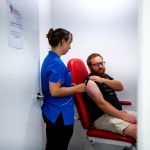
For women, the experience will feel familiar: a private consultation, a blood pressure check, a discussion of medical history, and — where appropriate — supply of the pill with tailored advice. If any red flags emerge, referral is immediate.
Every jurisdiction in Australia except the ACT now has a pathway in place or underway to allow pharmacist initiated contraception.
The moves add to the growing evidence which shows structured, pharmacist-delivered contraception services are safe, effective and valued by patients.
Why access matters
For many women, delays of even a few days can mean missed doses, gaps in contraception or prolonged discomfort from a UTI. Pharmacists already support women who run out of medication unexpectedly.
These reforms allow them to help from the outset — not only in emergencies.
The benefits extend beyond convenience. Faster access reduces the risk of complications, supports continuity of care and helps women stay in control of their health.
At the same time, GPs are freed to focus on more complex presentations — a practical redistribution of workload at a time when primary care capacity is under pressure.
What comes next
As Victoria prepares for implementation and the national trial begins, pharmacies across Australia are reviewing consultation spaces, refreshing clinical knowledge and strengthening relationships with local health providers.
The next phase will be about embedding these services sustainably and ensuring women know what support is available.
The bigger picture is one of alignment. With each state advancing its own model, national consistency is becoming less theoretical and more achievable.
The evidence is growing, the demand is clear, and the role of Australia’s community pharmacy landscap in women’s health is expanding with purpose.
Sources:
1. MedAdvisor recorded consultations 2025.
2. MedAdvisor Figures Dec 2025.
3. The nationally representative online survey (n=3,319; fielded 27 Oct–4 Nov 2025) by Insightfully.